2026 Logistics Cost Forecasts: Rising Fuel Prices in Transport
Published onByMiguel Alvarez
Logistics costs in 2026 could increase again, driven by energy market volatility and forecasts of rising fuel prices. Geopolitical tensions in the Middle East, along with instability in international shipping routes and the evolution of oil prices, are creating uncertainty regarding the cost of diesel used in freight transport. In this context, fuel remains one of the main operating costs for logistics companies, meaning any price variation directly impacts operational profitability.
Forecasts for 2026 point to a scenario in which fuel prices will continue to determine costs in logistics and transport. For companies in the sector, this implies greater difficulties in maintaining margins, adjusting prices, and planning routes efficiently. Analyzing the impact of fuel on logistics costs will be key to understanding how transport may evolve in the coming years.
Logistics Cost Forecast for 2026
Forecasts for logistics costs in 2026 point to a scenario of growing pressure for the transport and distribution sector in Spain. The evolution of fuel prices, energy market volatility, and the international geopolitical context are creating uncertainty regarding the evolution of operating costs in logistics.
In freight transport, fuel has a direct weight on the cost per kilometer, so any increase in the price of diesel quickly translates into an increase in logistics costs. As energy market conditions change, companies in the sector must review forecasts, adjust rates, and improve transport planning.
Analyzing the forecast for transport fuel prices and the factors that may influence their evolution over the coming months is key to understanding how logistics costs may evolve in 2026 and the impact this will have on the sector’s activity.
Transport Fuel Price Forecast
The forecast for transport fuel prices in 2026 is one of the factors of greatest concern to the logistics sector. Diesel remains the primary energy source for road freight transport, so any variation in its price has a direct impact on logistics costs. Its surge, triggered by the blockade of the Strait of Hormuz (Iran) and international geopolitical tension—even relative to gasoline—is worrying both companies and consumers.
Energy market estimates point to a scenario of volatility in the price of oil and its derivatives, conditioned by factors such as geopolitical tensions, production decisions by exporting countries, and the evolution of global demand. These elements directly influence the price of transport fuel, affecting the cost of every logistics operation.
For logistics and transport companies, closely monitoring fuel price trends is key to anticipating changes in logistics costs, adjusting forecasts, and adapting route, fleet, and operational planning during 2026.
Factors affecting fuel prices in logistics
The price of fuel in logistics is conditioned by several factors that directly influence freight transport costs. Among the most relevant is the evolution of oil prices in international markets, which determines the base cost of diesel used in road transport.
In addition to this factor, other elements affect the price of transport fuel, generating volatility in the energy market and variations in logistics costs. Key factors include:
Oil prices in international markets, which determine the cost of diesel used in transport.
Geopolitical tensions in oil-producing regions, which can affect the global energy supply.
Production decisions by exporting countries, which influence the available supply of crude oil.
Evolution of global energy demand, especially in major industrial economies.
Energy policies and fiscal regulation, such as hydrocarbon taxes or measures related to the energy transition.
For logistics and transport companies, understanding these factors is key to anticipating changes in logistics costs and evaluating how fuel prices may evolve in 2026.
Logistics Sector Trends in 2026
The transport and logistics sector in 2026 faces a scenario marked by rising logistics costs, fuel price volatility, and pressure on operating margins. These factors force companies to review their cost forecasts and adapt their logistics planning.
Key logistics sector trends include:
Increased operating costs in transport, driven by fuel prices and other costs associated with logistics activity.
Greater pressure on freight transport margins, especially in operations with high diesel dependency.
Need to optimize routes and logistics operations to reduce the impact of fuel on transport costs.
Greater use of data and analytics in logistics, aimed at improving planning and operational efficiency.
In this context, logistics and transport companies must pay special attention to the evolution of logistics costs in 2026 and the impact of fuel prices on freight transport.
Impact of Fuel on Transport and Logistics Costs
The impact of fuel on transport is one of the factors that most influences the logistics costs of companies operating in distribution and freight transport. In many logistics operations, fuel represents a significant portion of the total transport cost, making any variation in the price of diesel a critical element for profitability.
When fuel prices increase, the effect quickly transfers to the transport cost per kilometer, increasing expenses for distribution routes, long-distance transport, and last-mile operations. This increase affects both road transport companies and logistics operators that rely on mobility-intensive distribution networks.
Furthermore, the impact of fuel is not limited to the direct cost of transport. It also influences logistics planning, the profitability of certain routes, and the ability of companies to maintain competitive prices in freight transport. In a context of energy volatility, controlling fuel-related logistics costs becomes a key factor for the sector’s operational management.
How to Reduce Logistics Costs in Transport and Distribution
Faced with rising fuel prices and pressure on logistics costs, more and more transport and logistics companies are incorporating data-driven tools to improve planning and operational decision-making.
Anticipating transport costs depends largely on the ability to analyze operational data and optimize key processes in the logistics chain. In this context, technologies such as demand forecasting, transport route planners, or advanced supply chain management systems allow for improved operational efficiency and a reduction in the impact of variable costs.
These solutions allow for work on different points of the logistics operation:
Transport route planning, optimizing journeys and reducing unnecessary mileage.
Logistics demand forecasting, to adjust capacity, inventories, and transport operations.
Intelligent supply chain management, integrating information from suppliers, purchasing, and logistics.
Data-driven purchasing platforms, which allow for anticipating supply needs and improving purchasing decisions.
Predictive maintenance for vehicles and machinery, reducing unexpected downtime and improving operational efficiency.
AI agents for logistics operations, capable of automating information analysis and supporting decision-making.
At LISDATA, we work with hundreds of companies specialized in industrial sectors, logistics, and transport, developing solutions based on advanced analytics, artificial intelligence, and operational planning that allow for process optimization, anticipation of cost scenarios, and improved efficiency in logistics operations. The combination of data, predictive models, and planning tools is establishing itself as one of the primary ways to reduce the impact of rising logistics costs in the sector.
Transport Route Planning
Transport route planning is one of the factors that most influences logistics costs. When fuel prices increase, optimizing routes becomes essential to reduce unnecessary mileage, improve delivery times, and decrease fuel consumption in freight transport operations.
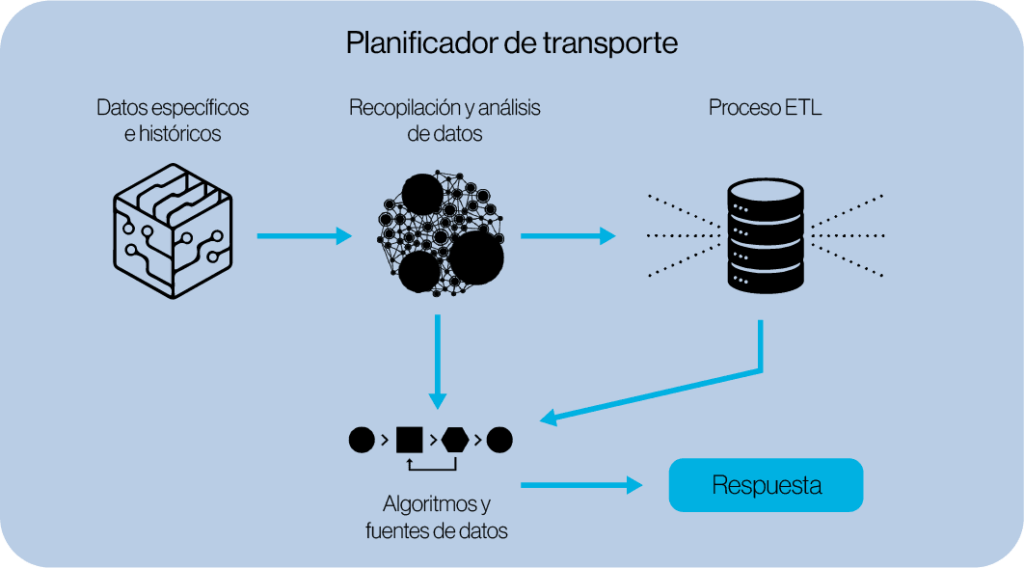
A modern transport planner is not limited to assigning routes or vehicles. It is a technological solution capable of analyzing large volumes of data and generating predictive scenarios that allow for the anticipation of changes in logistics costs and transport demand.
Among its most relevant functions are:
Route optimization, reducing distance traveled and fuel consumption.
Cost scenario simulation, taking into account possible fuel price hikes.
Dynamic transport planning, adapting routes and loads based on changing conditions.
Integration of historical data and market trends to improve logistics decision-making.
Thanks to these capabilities, logistics and transport companies can minimize the impact of fuel price fluctuations and improve the efficiency of their operations.
Predictive capability is one of the greatest values of an advanced transport planner. Through the analysis of historical data, consumption patterns, and external variables, it is possible to estimate how fuel price hikes will affect logistics costs. This allows companies to adjust transport rates further in advance, redesign logistics networks to reduce distances, evaluate the profitability of routes or customers, and plan investments in energy efficiency or new technologies.
In this way, organizations move from reactive transport management to strategic, data-driven management. In addition to the economic benefit, optimizing freight transport also contributes to reducing fuel consumption and associated transport emissions, which is increasingly relevant in a sector where operational efficiency and sustainability are increasingly connected.
Logistics Demand Forecasting
Demand forecasting in logistics allows for the anticipation of transport volumes, adjustment of inventories, and more precise planning of logistics activity. In a context of rising logistics costs, predicting demand helps avoid unnecessary trips and optimizes the use of fleets and resources.
Models for advanced analytics and demand forecasting use historical data, consumption patterns, and external variables to estimate the evolution of logistics demand. This information facilitates freight transport planning and improves operational efficiency.
Intelligent Supply Chain Management
Supply chain management is a key element for controlling logistics costs in an environment of fuel volatility. Having visibility over suppliers, inventories, transport, and distribution allows for better coordination of operations and reduces inefficiencies in the logistics chain.
Data-driven supply chain management platforms, such as advanced supply chain management systems, integrate information from different operational areas and allow for more informed decisions regarding purchasing, production, and transport.
Data-Driven Purchasing Platforms
Intelligent purchasing platforms, such as our Purchases solution, allow for improved supplier management and anticipation of supply needs through data analysis and demand forecasting. In logistics and transport, these tools help optimize purchasing decisions and reduce the impact of cost variations in the supply chain.
Integrating demand, inventory, and transport information allows for better purchasing planning and improves the efficiency of logistics processes.
Predictive maintenance for vehicles and machinery
Predictive maintenance in transport and industry allows for the anticipation of vehicle and machinery breakdowns through the analysis of operational data. This strategy reduces unexpected downtime, improves fleet availability, and contributes to optimizing logistics costs.
Through the use of sensors, operational data, and predictive analysis models, transport and logistics companies can detect patterns that anticipate mechanical failures and plan maintenance interventions before incidents occur.
These systems can analyze large volumes of operational data, identify patterns in logistics activity, and offer recommendations that help improve freight transport planning, optimize processes, and reduce logistics costs.
Logistics cost forecasts for 2026 point to a scenario in which fuel prices will continue to have a direct impact on freight transport and the profitability of logistics operations. Energy volatility, geopolitical factors, and the evolution of the oil market will continue to determine transport costs in the coming years.
In this context, logistics and transport companies need to improve their analysis and planning capabilities to anticipate changes in logistics costs. Route optimization, demand forecasting, intelligent supply chain management, and predictive fleet maintenance are establishing themselves as key tools for improving operational efficiency.
The use of advanced analytics, artificial intelligence, and data-driven planning allows organizations to identify inefficiencies, optimize operations, and reduce the impact of rising fuel prices on transport. In an environment of variable costs, having visibility over logistics activity and the capacity for anticipation becomes a determining factor in maintaining the sector’s competitiveness. Can we help you?
Frequently Asked Questions (FAQs) on logistics costs and fuel prices
In this section, we answer some of the most frequently asked questions about logistics costs and fuel prices. These issues help to understand how variations in the energy market due to the conflict in the Middle East can affect freight transportand the evolution of logistics costs in 2026.
How will fuel prices affect the logistics cost structure in 2026?
Forecasts for 2026point to the fact that fuel prices will continue to be one of the main factors of pressure on logistics costs. In transport-intensive operations, any increase in the price of diesel is transferred directly to the cost per kilometer, affecting route profitability and operational planning. For many logistics and transportcompanies, this implies reviewing planning models, optimizing logistics networks, and improving operational efficiency to maintain margins in a context of greater energy volatility.
How does rising fuel affect transport profitability?
An increase in fuel pricesincreases the cost per kilometer of transport routes. If this increase is not offset by adjustments in rates or improvements in operational efficiency, it can significantly reduce the profitability of logistics operations.
What strategic decisions can reduce the impact of fuel on logistics?
Companies are adopting strategies based on route optimization, advanced logistics planning, operational data analysis, and demand forecasting. These capabilities allow for improved transport efficiency and reduce the impact of variable costs.
Why is data-driven planning key in logistics for saving costs?
Data-driven logistics planningallows for the analysis of demand patterns, route performance, fuel consumption, and operating costs. This visibility facilitates strategic decision-making and allows for the optimization of the transport cost structure.
What technologies are helping to improve logistics efficiency?
Companies are incorporating transport planners, predictive demand models, supply chain management platforms, and artificial intelligence solutionsto improve operational efficiency and optimize logistics costs.
How can companies anticipate logistics cost increase scenarios?
Anticipation requires combining historical data analysis, predictive models, and logistics planning tools. These solutions allow for the simulation of cost scenarios, optimization of logistics networks, and strategic decision-making before market changes impact the operation.
What strategic decisions help to control logistics costs when fuel prices rise?
When the price of fuelincreases, many companies review their operating model to improve transport efficiency. This usually involves optimizing routes, redesigning logistics networks, improving load planning, and using data analysis tools to identify inefficiencies in the operation. At LISDATA, we are specialists in these types of solutions.
How can artificial intelligence help reduce costs in logistics and transport?
Artificial intelligence applied to logisticsallows for the analysis of large volumes of operational data to identify inefficiencies in transport, route planning, or supply chain management. Thanks to these models, companies can optimize operations, improve logistics planning, and reduce costs associated with freight transport.
What artificial intelligence applications exist in logistics and transport?
Applications of IA in logisticsinclude intelligent route planners, demand forecasting models, advanced supply chainmanagement systems, predictive fleet maintenance, and artificial intelligence agents capable of analyzing operational data and supporting decision-making.
How do AI agents help optimize logistics operations?
AI agents can analyze logistics operations data, identify patterns in transport performance, and generate recommendations to improve efficiency. This enables operations teams to make faster decisions that are data-driven.Operations teams can make faster, data-driven decisions.