
Internet of Things in Industry 4.0
As we have already discussed in previous articles, once the need to create a digital transformation plan has been identified for our organization to evolve toward Industry 4.0, there are several areas that must be addressed to create an ecosystem of 4.0 technologies. One of these main enabling technologies is the Internet of Things, or IoT.
At LIS Data Solutions, we are passionate about data—studying it, analyzing it, and putting it into context so that it can provide valuable information and conclusions to our clients, enabling better decision-making. However, to achieve this, we first need to capture the data, and thanks to the rise of IoT, this is becoming increasingly easy and accessible.
Internet of Things, IoT, IIoT, I2oT, home automation, beacons, BLE… many terms require more detailed clarification, as well as how they can improve our organization so that it becomes a connected industry.
Structure: How information travels
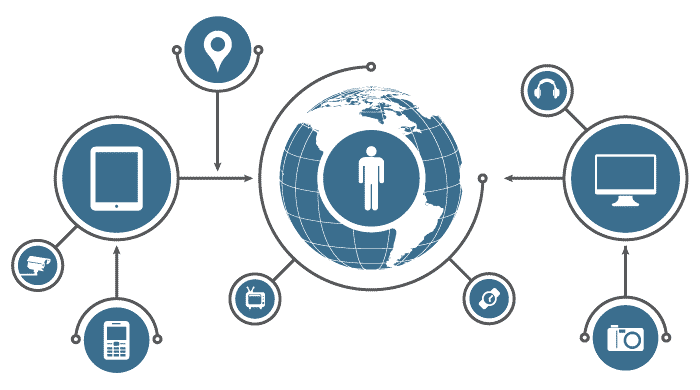
The idea underpinning IoT is the ability to interconnect all devices within the same network, often wirelessly. To create this scenario, the use of smart devices is necessary, typically with wireless connections such as WiFi, Bluetooth, or increasingly, ZigBee.
At this point, the available options begin to branch out, and as with any emerging technology, a clear standard has yet to be established, forcing the choice of one technology over another based on specific needs.
Developments based on BLE technology (Bluetooth Low Energy or Bluetooth 4.0) tend to be communication technologies designed for short-range use. One of the major benefits is the high level of standardization of this communication protocol, which, combined with its low energy consumption, allows it to be integrated into sensor-based applications requiring a considerable volume of data; a clear example is audio equipment based on this typology. This type of wireless communication allows for the creation of private networks with high security levels, making them ideal for industrial use.
Within the Internet of Things environment, the Bluetooth protocol has successfully integrated with beacons. Beacons are BLE-based devices small enough to be attached to walls or counters. One of the most successful applications is obtaining positioning in indoor environments where GPS technology is very costly.
Currently, WiFi technology is the most standardized wireless communication on the market. It offers a high capacity for sending information and increasingly operates within the 5GHz band, allowing for greater data transactions. However, its greatest virtue is also its drawback: to perform all this, it requires high energy consumption, which often makes it inaccessible for wireless devices requiring high autonomy.
Finally, ZigBee: a technology very similar to BLE but with a much lower bit rate, which directly impacts device autonomy, while offering a greater range of action, close to 100m. But what really makes this communication protocol interesting is the ability to create mesh, star, or tree networks. This is ideal for IoT applied in homes, but less so in industry, where it is currently very sensitive to radio frequency spectrum saturation.
As mentioned previously, creating the network requires devices capable of sending and receiving information, but also devices that act as dealers and decide where that information is stored. For example, in a home, we could have the house’s temperature control system and lighting control connected to IoT.
At LIS Data Solutions, we are capable of adding predictive analytics, neural networks, and alert systems within IoT systems. This is a revolutionary development within the industry.
Industrial Internet of Things (IIoT): Smart Manufacturing
As industry advances in ever-larger steps, and one of these steps is oriented toward data generation and processing, IoT in industry provides an outlet and use for them. We must consider that a robotic arm, such as those found in any modern factory, generates an immense amount of information throughout a workday thanks to the sensor technology it includes. But how can we include it in IoT?
Thanks to our experience working with data, LIS Data Solutions can currently carry out Big Data projects, such as predictive maintenance, remote monitoring, cloud computing, and the integration of neural networks for decision-making.
All of this brings great benefits to the industry through improved maintenance, greater efficiency, and availability.
The future of industry is strongly linked to the use of generated data and the use of the internet. This is why processes such as Business Intelligence, M2M (Machine to Machine) processes, and Big Data analysis are currently booming.
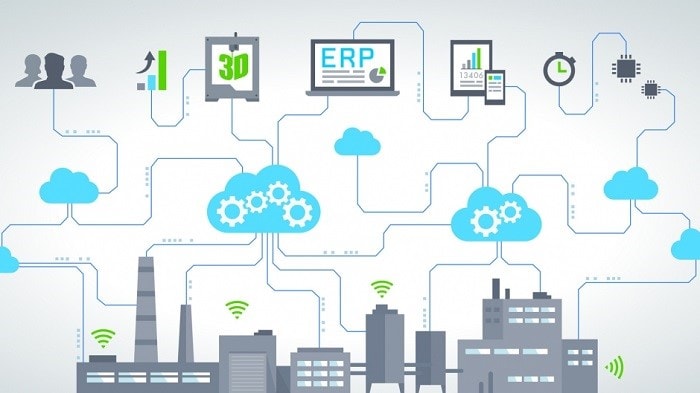
We are currently only at the threshold of what the fourth industrial revolution has in store for us—a revolution that, for the first time, does not have people as the main protagonists; this new revolution is about machines and an ever-growing virtual world.
Conclusions:
Industry 4.0 is a key concept in the current rapidly changing situation, in which organizations must adopt different 4.0 technologies to enable improvements in processes, efficiency, and productivity. The adoption of this new model will mean that suppliers, raw materials, machinery, processes, the final product, and customers are fully connected throughout the production process.
For the flow of information to be adequate, each part of the chain must be able to provide relevant data, so that information is captured in real time from the physical world (machinery, facilities, or existing devices). This capture of information, which allows for a connected industry or Industry 4.0, must be analyzed by experts in the implementation of Internet of Things (IoT) solutions so that the captured information adds value to the organization and is captured and stored in a way that fully ensures its security and integrity.