
AI applied to the naval sector: the INNCODIS project for Murueta Shipyard
The naval sector is one of the most demanding industrial environments in terms of safety, quality, and operational control. In this context, artificial intelligence only makes sense if it is capable of integrating into real processes and providing tangible value from day one.
The LISDATA team has worked on the INNCODIS project with Murueta Shipyards, demonstrating that AI and advanced analytics can become a real engine for efficiency, anticipation, and continuous improvement in a highly specialized naval environment.
AI applied to real processes in the naval sector
INNCODIS was created with the objective of taking artificial intelligence from the conceptual level to its direct application in the shipyard’s daily operations. Throughout the project, solutions based on computer vision, language models, predictive maintenance, and industrial Business Intelligence have been implemented, all aligned with existing processes.
The application of AI and advanced analytics has translated into greater capacity for anticipation, occupational safety, operational control, and traceability, always at the service of people and the business.
Solutions developed in the INNCODIS project
Throughout the INNCODIS project, various solutions based on artificial intelligence and advanced analytics have been designed and implemented, all aimed at solving specific operational needs of the naval environment. Each development responds to real daily challenges at the shipyard, integrating into existing processes and providing measurable improvements in efficiency, safety, and control.
Inventory and logistics with computer vision
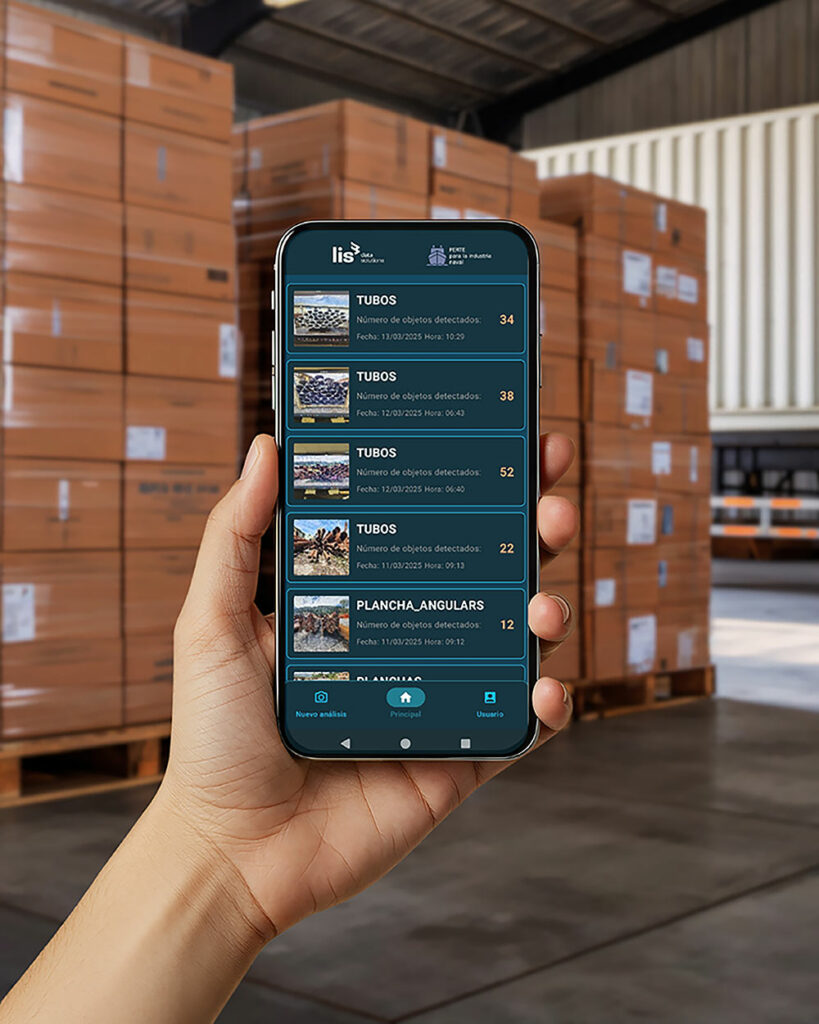
An automatic material counting system has been developed using computer vision models integrated into a mobile application.
This solution allows for identifying, counting, and tracing materials in real time, reducing manual errors and improving project planning, as well as the early detection of deviations in inventory and logistics.
Predictive maintenance and intelligent CMMS
The project drives the evolution from reactive maintenance toward a predictive model based on real machinery data, sensors, and intervention history.
The CMMS incorporates artificial intelligence and language models that allow technical teams to consult incidents in natural language, receive recommendations, and anticipate failures before critical stops or breakdowns occur.
Welding quality control through AI
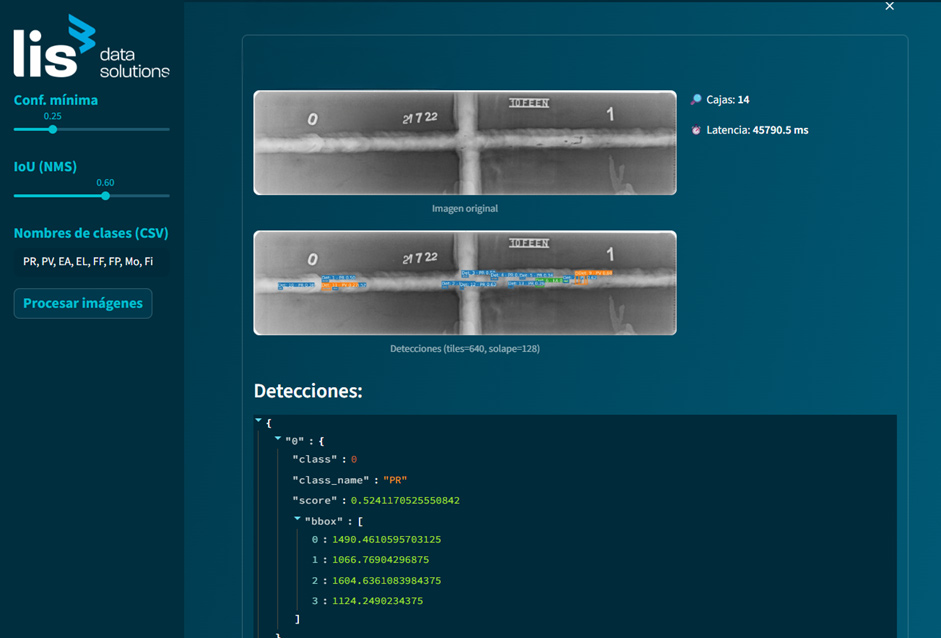
Structural quality is a key factor in shipbuilding. To reinforce it, image analysis models have been implemented for the automatic inspection of welding radiographs.
These models allow for the detection of defects such as porosity or cracks, reducing rework and associated costs, and reinforcing the reliability of inspection processes.
Intelligent occupational safety
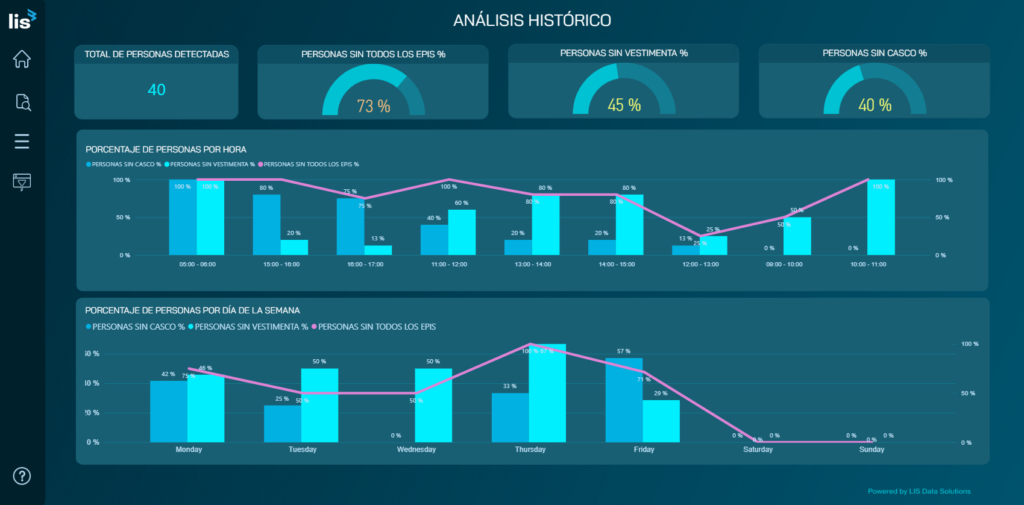
The safety of people is a central pillar of the project. Using computer vision algorithms, an automatic detection system for the correct use of PPE in high-risk areas has been developed.
The solution allows for continuous and remote monitoring, improving compliance with safety regulations without interfering with daily operations.
Industrial Business Intelligence
All solutions are supported by an industrial Business Intelligence layer, where different data sources are integrated into dashboards developed with Power BI.
These dashboards offer visibility into operational efficiency, asset status, maintenance costs, and the degree of plan compliance, facilitating data-driven decision-making.
Results of using AI in the naval industry
With the completion of the PERTE Naval, the INNCODIS project demonstrates that artificial intelligence can be successfully integrated into a sector as specialized as the naval industry.
For LISDATA, this work reinforces a key idea: AI only generates value when it directly impacts processes and the daily work of people. This is the approach with which we accompany industrial organizations in their evolution toward more efficient, safe, and data-driven models.
If you want to know how we apply artificial intelligence in real industrial environments and how these solutions can be adapted to your organization, do not hesitate to contact our team.