
RORO Management System
In this section
A solution for managing storage yards and RORO port traffic operations, supported by the integration of multiple data sources available and obtainable from port logistics operations.
Objectives
- Digitalize and optimize the management of port logistics space for RO-RO operations.
- Increase management efficiency with greater visibility, control, and planning forecasts.
- Increase competitiveness against rival ports/terminals: better quality and service levels.
Managing space in a RORO storage yard is a difficult task. It becomes even more challenging to manage such facilities with different parties operating simultaneously with varying volumes and unit turnover. Which spaces are available right now? When will we need more space? Which areas are best suited for a particular use?
What we do
We digitalize and automate the management of port logistics space for RORO storage and operations. We relieve the Port Authority, Terminal, and stevedoring companies of management, coordination, and preparation tasks for arrivals/operations/port calls/imports and exports.
We integrate the database and enable the interconnection and democratization of data between public and private stakeholders, creating a data-driven ecosystem.
How we do it
COMPUTER VISION SYSTEM
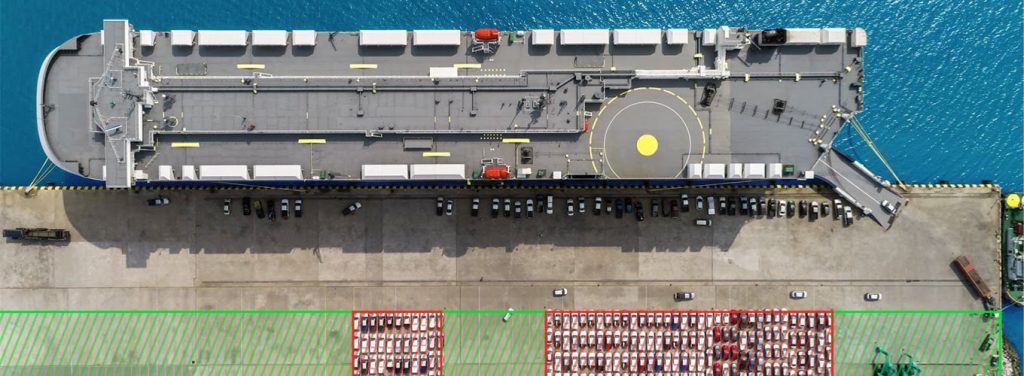
By using camera imagery, we detect parking space occupancy through Deep Learning. We identify the spaces directly from the camera footage, and a classifier detects the presence or absence of a vehicle.
VEHICLE TRACKING SYSTEM
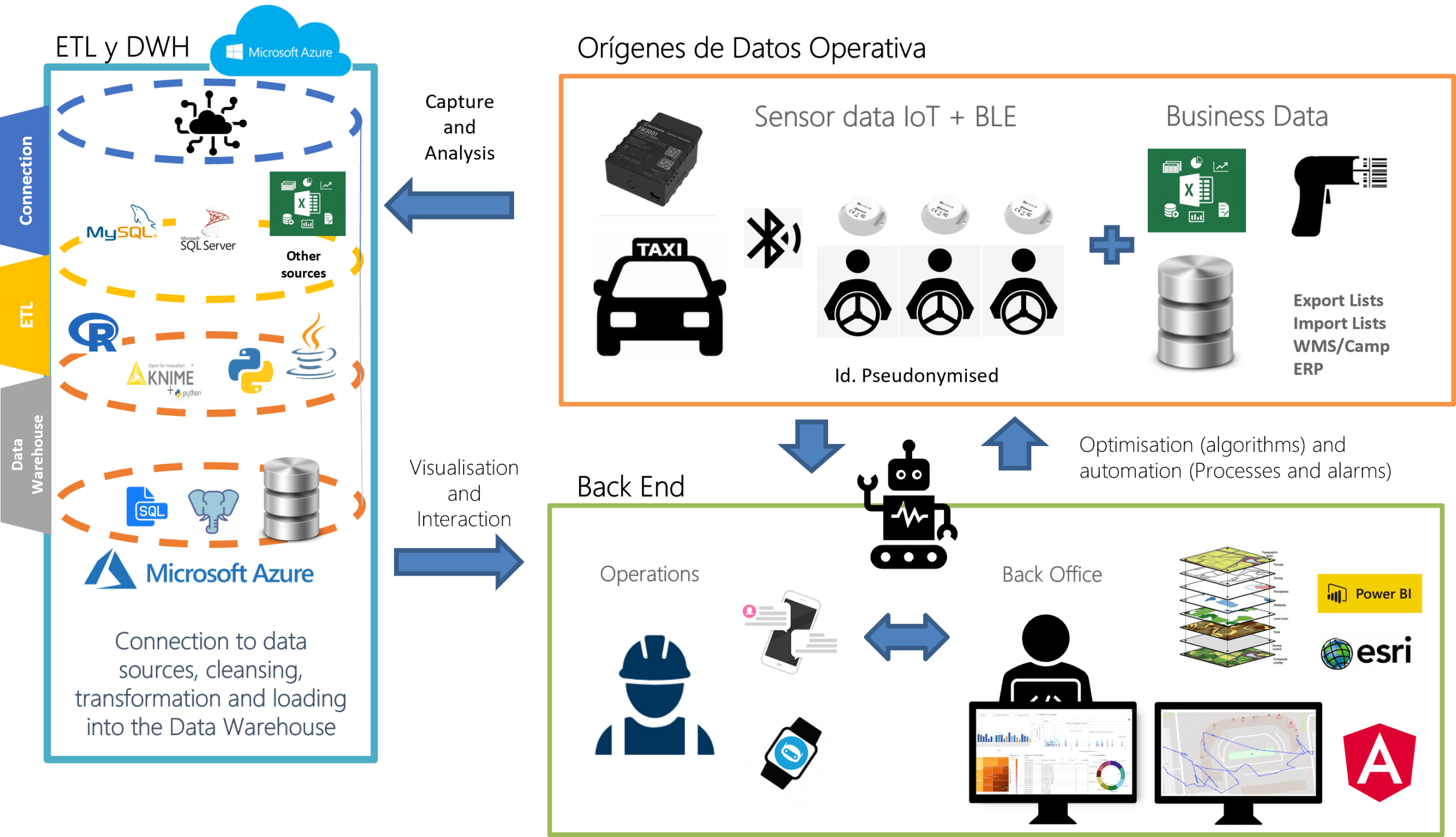
We integrate IoT sensors—compact, smart trackers—into RORO fleet vehicles, enabling us to obtain fleet routes and performance data through an intelligent platform built on a modular, scalable, and versatile architecture.
INTEGRATION OF BOTH SYSTEMS
Using ETL tools and Business Intelligence software, we will guide the RO-RO port ecosystem (vehicles, truck+trailers, maffis, H&H) toward the interconnected exploitation of multiple functionalities.