
Use case
LogisticsRoad Transport Planner
In this section
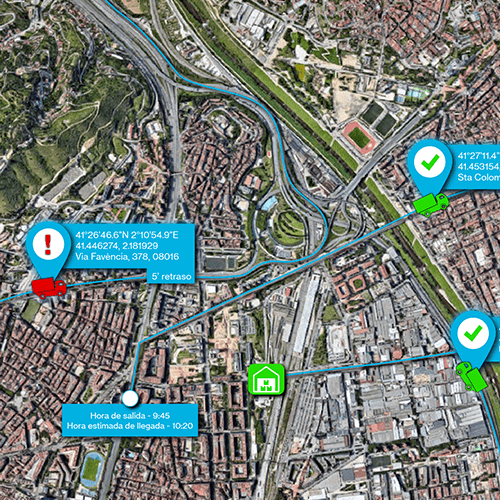
The use of our predictive technologies and rapid-response optimizers creates a digital traffic manager model, which assists traffic department personnel and frees them from the most repetitive tasks, allowing them to focus on higher value-added activities.
Objectives
- Relieving the traffic manager’s workload
- Improving the accuracy and speed of truck-to-trip assignments
- Increasing the performance of the traffic department
The task performed by traffic managers in logistics and transport companies is probably one of the most active roles in the sector. It requires high concentration and the management of a large number of variables, many of which are beyond their influence; therefore, extensive experience is needed to provide a quick and optimal response to each of the multiple situations they manage daily. Not only is it a job that requires special skills, but it also has a significant influence on the companies’ operating results, as every decision they make is reflected in the company’s performance and profits. At LISDATA, we propose to increase these profits by helping traffic departments in their daily operations, assisting them with the most innovative technologies.
What we do
We provide our clients with the most advanced artificial intelligence optimizers, capable of learning and adapting to the daily operations of international transport companies or regional branches that deliver thousands of packages a day.
This intelligence infers part of the existing experience and aggregates it with multiple data sources, such as traffic status, driving and rest times, or weather conditions, among others. It also considers the status of the rest of the fleet and, of course, the conditions and restrictions at the client sites.
Our optimizer provides precise responses to every assignment need, based on training and the vast amount of data and variables it considers.
How We Do It
Analysis, collection, and transformation of specific data
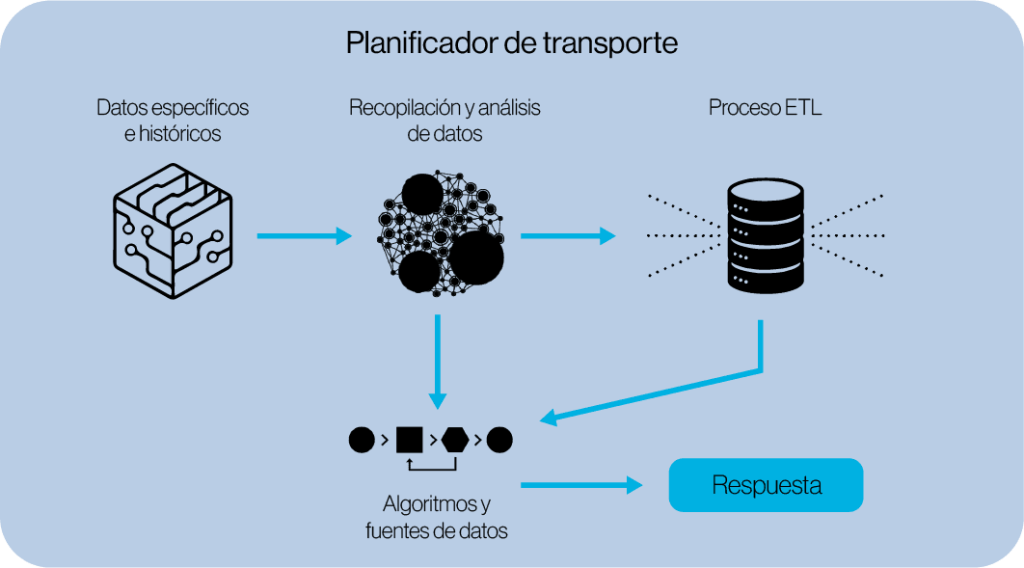
We identify project-specific data, collect historical data, and analyze special cases. This data set undergoes an ETL process for treatment and system loading, which ensures data quality.
Specific model training
The model incorporates different algorithms and data sources, combined with the specific data from the previous phase. With the complete data set, the model is trained to obtain a tailored and personalized response.
Specific model training
The model incorporates different algorithms and data sources, combined with the specific data from the previous phase. With the complete data set, the model is trained to obtain a tailored and personalized response.