
Why create AI agents with Microsoft AI Foundry
The adoption of artificial intelligence in companies has advanced significantly in recent years. More and more organizations are exploring how AI can help them improve efficiency, streamline processes, and support day-to-day decision-making. In this context, AI agents are gaining prominence as a natural evolution of generative AI: systems capable of interacting with people, accessing corporate knowledge, and executing tasks autonomously, always aligned with business processes.
However, as the use of AI-based solutions grows, new concerns also emerge. Many companies have experimented with generic chatbots, but soon encounter significant limitations related to information security, lack of control over data, and the difficulty of integrating them into corporate environments. These risks mean that AI is not always viable in scenarios where confidentiality and compliance are critical.
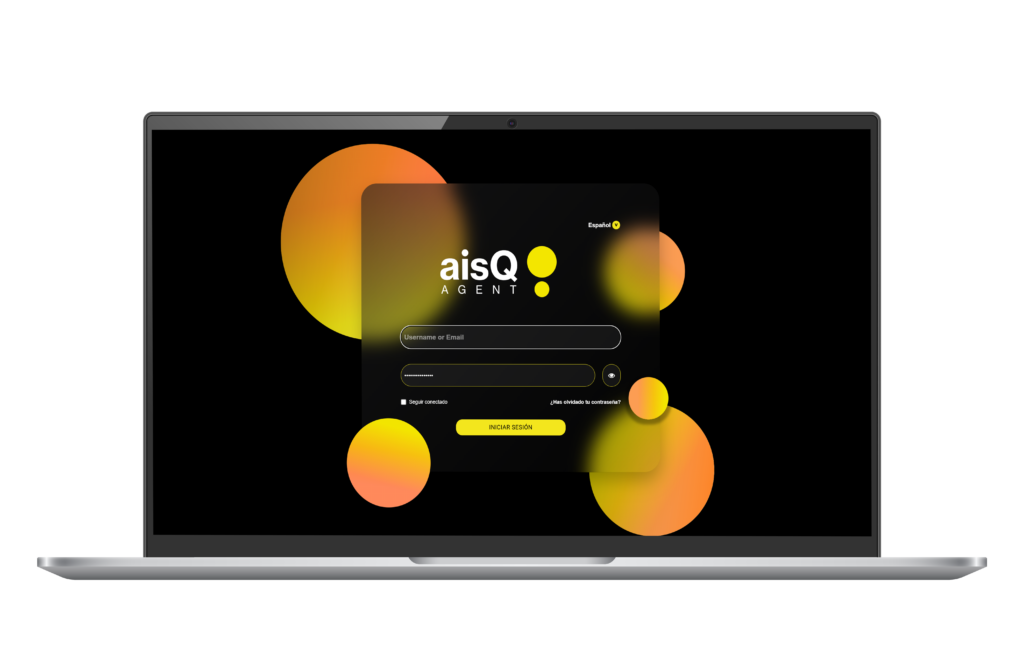
In this scenario, tools such as Microsoft AI Foundry or aisQ AGENT offer a different approach to creating enterprise AI agents, providing a foundation prepared for professional environments where security, governance, and scalability are not optional, but fundamental requirements for moving from experimentation to real production use.
In which use cases does it make sense to create AI agents in the company?
At LISDATA, we regularly work with companies that want to go beyond experimentation and create AI agents that actually work in their business environment. Our experience has shown us that these projects make sense when starting from specific day-to-day problems and not from technology alone. For this reason, most of the initiatives we support are born from real needs, such as agile access to internal knowledge, reduction of operational load, improvement in information analysis, or support for people in their daily work.
Throughout various projects, we have seen that AI agents provide more value when they are integrated into existing processes, respect security policies, and adapt to the context of each organization. This practical approach allows us to quickly identify which use cases are viable, which can scale, and which should be discarded, avoiding pilots that never reach production. Working on enterprise platforms such as Microsoft Azure AI Foundry or aisQ AGENT and doing so by supporting the teams is key for AI agents to become a useful and sustainable tool over time.
AI agents for consulting corporate documentation
In many companies, key information is distributed across documents, manuals, regulations, or internal repositories that are difficult to exploit. AI agents allow for centralized access to this corporate documentation and natural language queries, reducing search time and making it easier for teams to find reliable and updated answers. This approach improves operational efficiency and ensures that access to information respects the organization’s permissions, roles, and security policies.
AI agents for the analysis of tenders and awards
The analysis of tenders and awards usually involves large volumes of information and complex requirements. AI agents help process and synthesize this documentation, identifying key points, relevant criteria, and potential risks more agilely. This allows teams to reduce manual workload, improve the quality of analysis, and make more informed decisions in less time.
AI agents for generating meeting summaries
Meetings generate valuable information that, if not structured correctly, can be lost. AI agents allow for the generation of clear summaries of the points discussed, agreements reached, and next steps, facilitating follow-up and coordination between teams. This use case is especially useful in organizations with a high meeting load and a need for traceability in decision-making.
AI agents for consulting internal policies and HR support
In areas such as Human Resources, AI agents offer an effective channel for resolving frequent questions about internal policies, procedures, and regulations. In this way, the experience of employees is improved, the volume of repetitive queries is reduced, and it is ensured that the information shared is consistent and aligned with the organization, freeing up HR team time for higher-value tasks.
AI agents for the consultation and analysis of logistics information
In logistical and operational environments, having clear and accessible information is key to daily operations. AI agents allow for queries regarding shipments, routes, rates, or operational statuses using natural language, integrating with existing systems. This improves visibility over the operation, streamlines decision-making, and reduces technical dependencies in complex contexts.
How to create AI agents for my company?
Creating AI agents for a company is not just a technological matter. It involves making key decisions about architecture, security, data governance, integration with existing systems, and adoption by teams. Without a proper approach, many projects remain as isolated tests that do not scale or generate distrust within the organization.
Therefore, having a specialized technological partner is fundamental. A partner with experience like LISDATA helps define the correct use cases, ensures that AI agents are built on secure and scalable foundations, and supports the company throughout the entire project lifecycle: from initial design to deployment and evolution in production.
Why work with a Microsoft partner to create AI agents?
Working with a partner of Microsoft such as LISDATA ensures that AI agent projects are developed under proven standards of quality, security, and reliability. Partner companies comply with the requirements and frameworks defined by Microsoft, which implies a deep knowledge of their platforms, best practices in architecture, and an approach aligned with the demands of corporate environments. This is especially relevant when handling sensitive data, when control over information is required, or when it is necessary to comply with internal security regulations and policies.
In addition to that technological backing, at LISDATA we support companies throughout the entire process of creating AI agents. We do not just implement technology; we work alongside teams to identify use cases with real impact, design solutions adapted to each organization, and ensure progressive and sustainable adoption. Our approach is practical and close, moving from idea to action, and from there to continuous improvement, so that AI agents become a useful and reliable tool in the company’s daily operations.