
What is predictive maintenance?
Predictive maintenance is a technological tool within the Industry 4.0 framework that allows us to revolutionize a production plant’s maintenance schedule, focusing resources on the machines that need it and avoiding unexpected downtime, which can lead to long and complex repair periods.
Predictive maintenance should be understood as the final stage of a process, the speed of implementation of which will depend on the plant’s degree of digitalization and the available knowledge of the machines to be monitored. For more information on the steps involved in implementing a predictive maintenance system, you can read the post ‘Steps to Take in a Predictive Maintenance Plan.’
So, what is the goal we’re pursuing with predictive maintenance?
We want to achieve objective, data-based knowledge of how the machines operate by modeling their normal working modes. This way, we’ll be able to anticipate failures, which will allow us to save resources and repair time.
To achieve this knowledge, we monitor the target machines, observe their operation, and analyze it in detail.
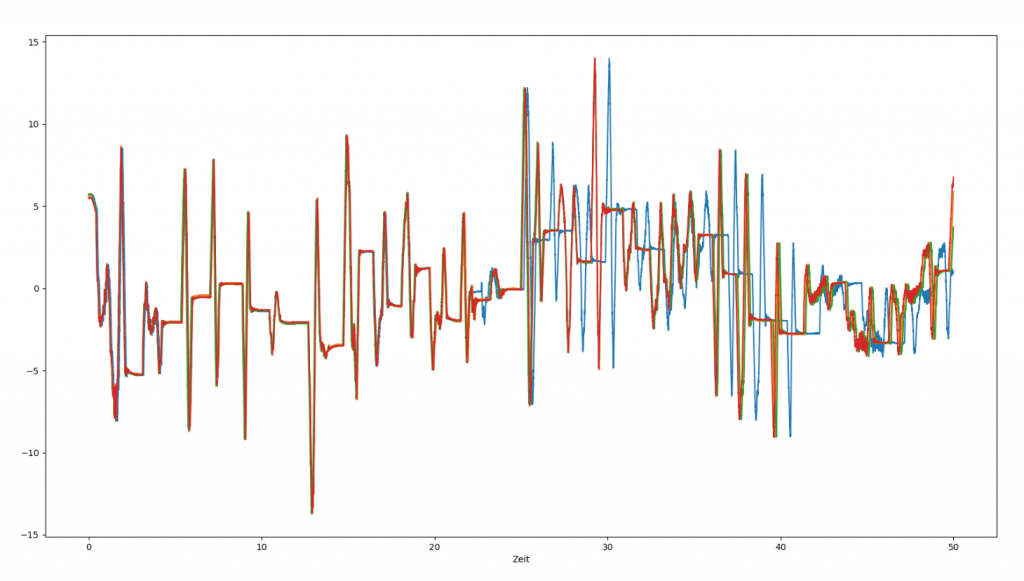
Parameter comparison of two asynchronous machines
We draw on the process knowledge of production experts and, in parallel, reinforce the analysis with algorithms that allow us to “understand” the observed correlations and transform them into highly probable cause-and-effect relationships. With this information, we have modeled the normal operation of the target machine.
Similarly, failures involving maintenance are monitored, classified according to the plant’s internal criteria, and linked to specific limits for sets of parameters.
Once we know how our machine behaves during its normal work cycle, we’re able to compare daily operation—thanks to real-time monitoring of the target parameters—with that modeled normal cycle.
This is where data processing through refined algorithms comes into play once again, going beyond detecting isolated differences between the model and actual performance, and focusing instead on those combinations of parameters that gradually drift away from normal operation and may reach limits considered anomalous or risky, making it possible to anticipate failures whose mitigation would otherwise pose a much bigger problem.
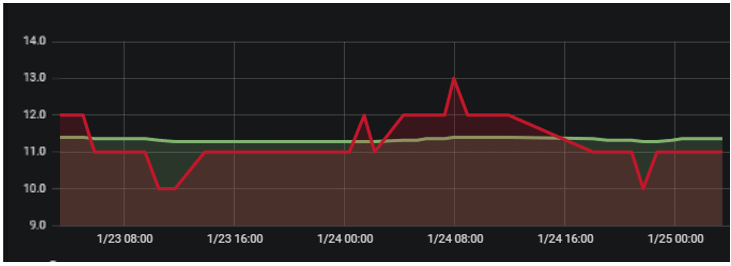
Goal: A data-driven maintenance schedule
Once this way of working is established within the company’s processes, machine maintenance planning is no longer led by habit, intuition, or individual expertise, but instead becomes data-driven.
We move from an intervention model guided subjectively by experienced personnel to one guided by objective information that everyone can interpret. The advantage is twofold: on one hand, we reduce unnecessary maintenance interventions that are currently scheduled as preventive; on the other hand, we gain a clear view of when intervention can take place and at what level of risk—extremely useful information for coordinating with the plant’s planning.
Monitoring: Control and continuous improvement
As an additional benefit, common to digitalization processes, we build a comprehensive database, in this case covering incidents, failure modes, solution effectiveness, and more.
All of this makes it possible, in the future, to establish a process for monitoring and evaluating the actions taken. In other words, it opens the door to eventual tracking aimed at continuous improvement, a requirement nowadays for evolving processes in the factory of 4.0.