
What is OCR, and what benefits does it offer for businesses?
OCR systems—Optical Character Recognition in English—improve business efficiency across various areas, including production, logistics, quality, and procurement, and are proving revolutionary in the context of document management automation.
What is OCR?
OCR, or Optical Character Recognition, is, as its name suggests, a system that identifies printed or engraved alphanumeric characters by capturing an image. This technology is used to read codes and digitize texts, enabling autonomous information management, which saves time, eliminates errors, and increases efficiency.
Optical Character Recognition is used, for example, to locate items in a warehouse or recognize references printed on parts or products, in order to automate stock inbound and outbound management processes, track production or expiry dates, streamline quality control systems, or optimize traceability processes, among other tasks.
However, as noted earlier, OCR systems are not only useful for reading individual characters; they can also be used to digitize printed documents of any kind: invoices, delivery notes, receipts, contracts, and much more.
With this application, Optical Character Recognition has become the perfect ally of document management systems, which are key to optimizing work in companies. Automating organizations’ document flow management frees up time, increases effectiveness, and improves security—areas to which, as we can see, OCR makes a significant contribution.
What are document management systems?
Document management systems consist of a set of techniques that enable this automation in document processing. Processing invoices, delivery notes, payslips, etc., requires significant dedication from teams that must register incoming documents, carry out the steps required for each one, forward them to the people responsible for each action, and then file and store them. It is a time-consuming job because many processes are opened daily and must be kept under control.
In this context, document management saves time and space, increases control over documents, improves security by enabling backups and the establishment of access keys, and facilitates information retrieval, among many other capabilities.
OCR in document management
As we have seen, OCR software scans documents of any kind, analyzes their content, and extracts the information they contain. In this way, invoices, delivery notes, contracts, or receipts become structured data in digital format, and their management is automated, improving efficiency and saving time.
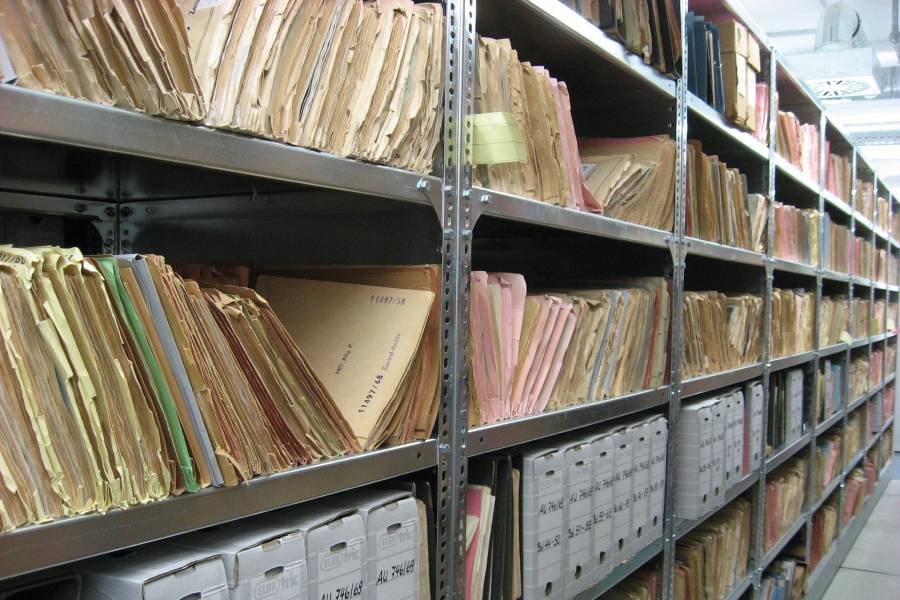
That is, once the information from the paper document is captured using OCR technology, the document management systems themselves automatically process the collected information, both to comply with any required administrative procedures and for archiving. And this last point is no less important than document processing. We may need an invoice, contract, or delivery note from years ago, and now finding it is simple and fast because all the information is stored digitally in one place, whereas previously it was necessary to search through multiple filing cabinets until the required document was located.
However, OCR systems offer even more advantages. They not only allow us to automate administrative management and organize and store documents to simplify searches; it is also possible to edit the information by adding data or deleting records. In short, they make it possible to keep documents up to date and aligned with the company’s needs.
Deep Learning-based OCR
Optical Character Recognition also faces more complex readings such as those performed on plastics, engravings on metal, those printed on curved materials, etc. To address complex identifications, Deep Learning-based reading systems have been developed, which learn different possible versions of characters in order to recognize them when they do not present an optimal image.
To train machines, images of characters in different versions are collected, their features are labeled, the model is trained, and its performance is validated. After this process, it is possible to identify deformed alphanumeric characters, with glare, with partial prints, in different positions, or with low contrast.
Benefits of OCR
- Digital conversion and automatic storage of printed documents.
- Space savings.
- Improved security in safeguarding information.
- Accessibility and reduced time spent on search tasks.
- Full control of the document lifecycle, with the ability to update files by adding information or deleting records