
What Is Business Intelligence?
In recent years, very significant changes have been taking place in the field of business technology. Technological advances have led to a drastic reduction in data storage costs. But what is the use of that enormous amount of data if we cannot analyse it? This is where Business Intelligence comes in.
Business leaders around the world, of all sizes, are beginning to ask questions that, until not so long ago, were little more than science fiction, only within reach of large multinationals: How can I leverage all that information so that it enables me to make the right decisions and, ultimately, drives us to grow? How can we bring order to that mountain of data coming from multiple heterogeneous systems so we can obtain valuable information about any area or process within our company?
In this context, concepts such as Business Intelligence (known by its acronym BI) are among the “buzzwords” on every business leader’s lips. But do we know exactly what Business Intelligence is?
A brief history of Business Intelligence
The term “business intelligence” was first used in 1865 by Richard Millar Devens in his work “Cyclopædia of Commercial and Business Anecdotes”. In it, he recounted an anecdote in which a banker, Sir Henry Furnese, profited by acquiring and using contextual information that he received before his competitors. To do so, he built a network of informants who provided him with any data relevant to his activity; he collected it and used it to guide his business.
The ability to collect information, both internal and external, and make decisions based on it remains at the heart of BI today. The principle is still the same: be the first to obtain information, the first to turn it into knowledge, and the first to use that knowledge to guide business activities.
The fundamental difference between that business intelligence and today’s lies mainly in its democratisation. In the mid-19th century, very few had the means to access information in time, analyse it, and stay ahead of events. Today, with the IT systems available to us, this has changed radically.
21st-century Business Intelligence
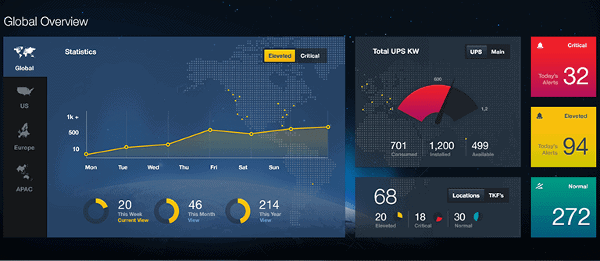
Today, we understand Business Intelligence as the use of strategies and tools that transform raw data into information and information into knowledge, with the aim of improving a company’s decision-making process. Ultimately, it is about optimising how companies use their data and the information they possess.
As we mentioned at the beginning of this article, the amount of data available to companies is growing all the time: customer data, supplier data, market and competitor data, as well as internal company information such as warehouse movements, sales and expense histories, and even employee data.
The concept of Business Intelligence therefore combines internal and external information from a wide range of sources: the data a company collects about its logistics flow, for example, is business intelligence. But so is the information our customers share with us on social media, data from IoT production lines, or a report on a new sector the company wants to enter.
So, what does implementing a Business Intelligence project bring to a company?
The relevance of business intelligence for any company, of any size, is unquestionable. However, the complexity of collecting data, processing it, transforming it, cleansing it, analysing it, and presenting it appropriately is far from trivial.
This is what has led to the proliferation of specific Business Intelligence tools as well as data-driven consulting services, such as those offered by LIS, which provide high added value.
Share on Facebook
Share on Google
Share on Twitter
Share on LinkedIn
Share on Pinterest
Share on Print
Share via Email