What is Business Intelligence? Why is it essential for your company?
In today’s aggressive and dynamic landscape, change is the only constant. More than ever, it is vital for companies to be at the forefront of technology.

The high level of competitiveness in the business world demands a secure, agile, and reliable approach to decision-making, minimizing uncertainty as much as possible. Having a detailed understanding of our company with a global overview generates a significant competitive advantage, as it allows for efficient decision-making. A business intelligence solution provides the company with the necessary resources to face these strategic or operational decisions based on data analysis.
What does Business Intelligence (BI) consist of?
Business intelligence is defined as a set of methodologies, applications, and technologies that allow obtaining, cleaning, and transforming data from both transactional systems and internal and external information of a company or organization. In other words, they convert accumulated data into useful information.
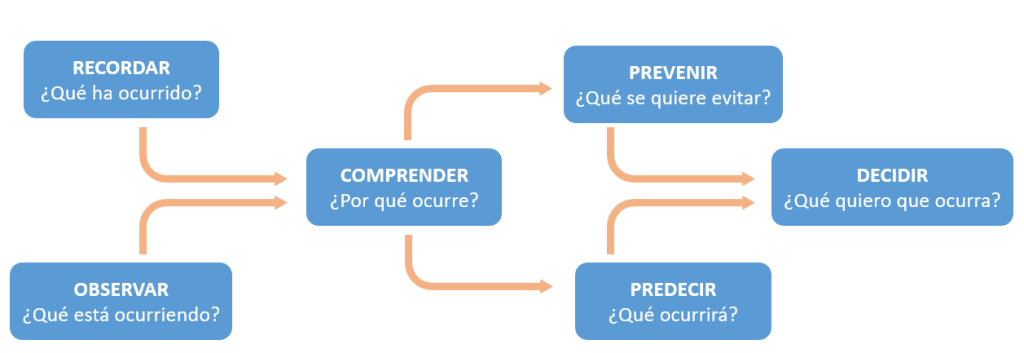
The objective of BI is to create a detailed map of the entity’s past, present, and future situation. Like Dickens’ ghost of Christmas, it shows us what our business reality has been, what it is, and what it will be. From this, we can THOROUGHLY UNDERSTAND and KNOW the company, and with that information, make ESTIMATIONS to make the best possible decisions in the present, optimizing the future.
- Understand what has happened in the past. Analyzing how industrial equipment has performed, how much time has been invested in a process, the associated costs, or the impact of past decisions allows us to know how work has been done so far and what aspects need improvement.
- Know the current situation of the company within the market. Analyzing how optimized its operations, production, and resources are, or where its strengths lie, are some of the conclusions that can be obtained through the use of BI tools.
- Estimate the organization’s future projection reliably in the medium/long term generates a great advantage that facilitates decision-making and increases the probability of success.
How is BI applied in companies?
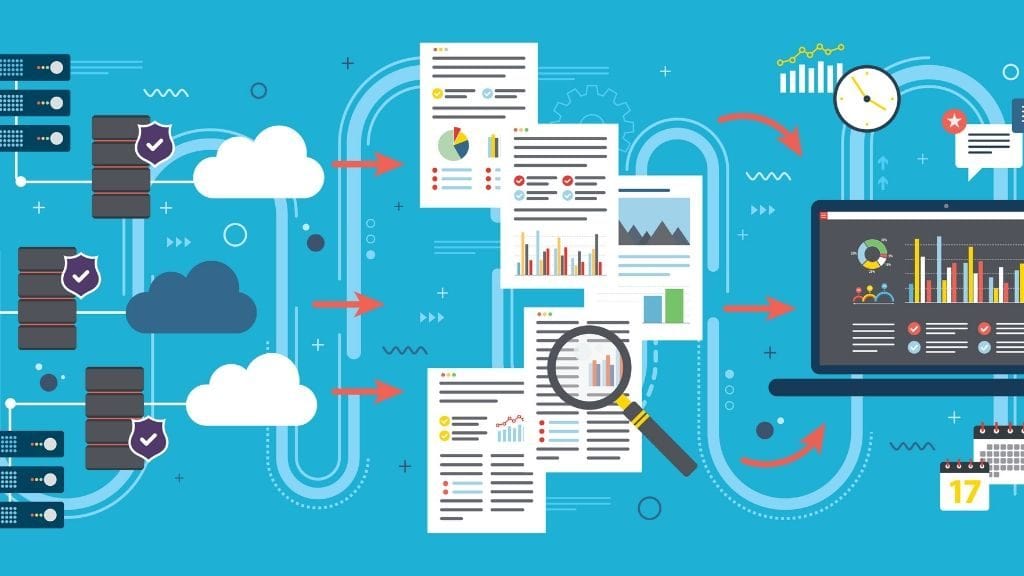
To understand the potential and weaknesses of any organization, in order to make accurate plans for the present and future, one must start from the raw data generated by every company. From this information, by applying BI, models are developed which are then analyzed and represented with specific tools, allowing us to accurately determine highly influential values such as consumer data, financial control, process productivity, resource efficiency, cost optimization, etc.
But as we have seen, BI makes it possible to go a step further and, with all the extracted and processed information, represent different future scenarios thanks to the use of mathematical and statistical models that introduce a component of uncertainty.
Advantages of implementing Business Intelligence projects
A BI solution provides a series of important advantages:
- Greater efficiency
- Resource optimization
- Faster response time
- Greater understanding of company strengths and weaknesses
- Simplification of the decision-making process
- Increased productivity
- Improved customer service
Power BI Tool
At LISDATA, we are experts in BI solutions and are accustomed to working with some of the most important BI platforms on the market: Qlik Sense, Qlikview, Tableau and Power BI.
In this post, we will detail the characteristics of Power BI.

Power BI is the business intelligence tool designed by Microsoft. It has a great parametrization capacity thanks to its numerous plugins, which allows for the design of different dashboards, giving it great functionality and versatility.
This versatility is also reflected in the ease of integrating external data, and along with its low cost, makes it a simple and complete tool. Furthermore, it is available in various formats such as Power BI Desktop, its online version, or the mobile or tablet app.
Business intelligence is applicable to all sectors, and in this task, Power BI simplifies data processing and visualization to facilitate understanding of the organization’s status. It allows us to design dashboards for the areas of:
- Production. Dashboard design to observe statistical data on production lines or operator productivity.
- Logistics. Allows for monitoring orders, inventory turnover, or product location in the warehouse.
- Facilitates the financial analysis of the company with data such as expenses, costs, taxes, or investments.
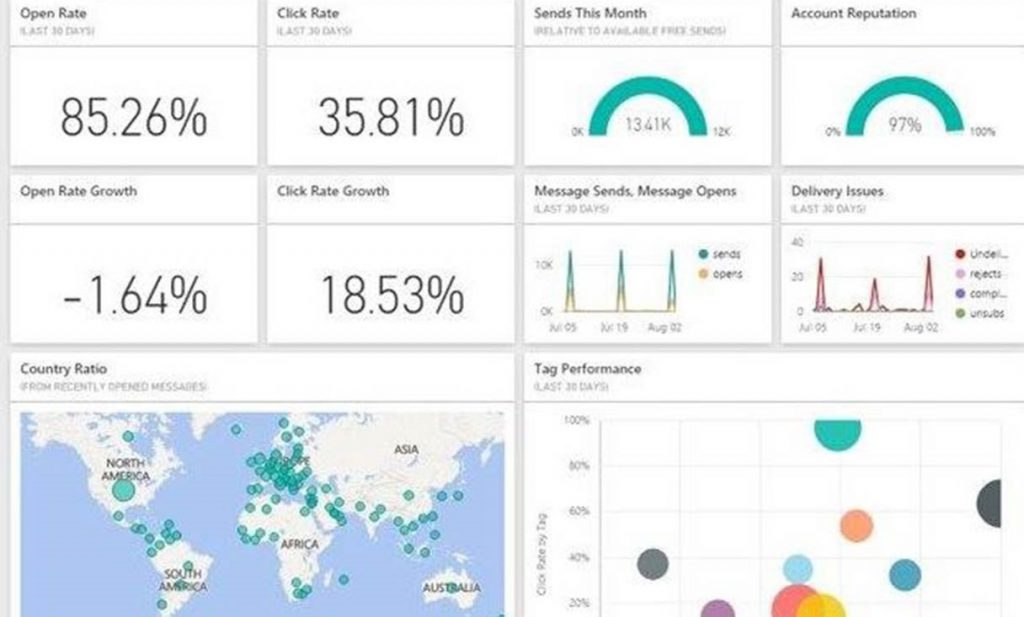
As can be seen, the visualization provided by Power BI is dynamic, intuitive, and diverse in data representation, which favors its comprehension and subsequent analysis.
Conclusion
In short, business intelligence allows us to remember what has happened, observe what is happening, and understand why it is happening, in order to prevent anything we want to avoid, predict what will happen in the future, and decide in the present how we want events to unfold.