
Truths and lies about supply shortages: Do we need to bring forward our Christmas shopping?
In recent weeks, we have repeatedly heard in the media that we are experiencing a supply crisis driven by global logistics issues, which has led to widespread shortages. Products and components are missing, and cannot be distributed or even manufactured, due to the difficulty of sourcing raw materials. This is the global context we are living through—it is true—and Christmas is just around the corner, the peak shopping season, which will put even more strain on an almost collapsed system.
Pinpointing a single, specific cause of the problem is not easy—and it is not easy because there is not one. The complex landscape of logistics today stems from a chain of several crises, such as the abrupt rebound in consumption after the biggest shutdown in recent history, the increase in online transactions, the shortage of road transport professionals, the reduction in ocean freight capacity that has sent prices soaring, and the need to modernize logistics management mechanisms.
Will there be a shortage of toys at Christmas?
The solution to the biggest supply bottleneck in history does not appear to be close, and certainly not within the next month. Will we run out of the products we want this Christmas? The answer is a resounding yes, although it should be clarified that a general shortage of items is not expected; only the most in-demand products will sell out.
A clear example is the letters children will be sending very soon to Santa Claus and the Three Wise Men. Every season there are certain trendy toys that all children include on their wish list. Those will most likely face a lack of replenishment once stock is used up, due both to the difficulty of restocking imported products and, in some cases, to the stoppage or slowdown of manufacturing processes themselves because of supply shortages.
Will there be a toy shortage? Will we have clothing, leisure items, culture, food… this Christmas? Of course—there will not be a lack of goods; the question is whether we will be able to get the black T-shirt from the trendy brand everyone wants, the video game everyone is playing, or the latest phone model launched on the market.
A paradox is therefore emerging: in a period of strong demand with rising consumption, manufacturers see their activity reduced and their sales curtailed because key parts or materials for production do not arrive, or arrive in quantities far below what is needed. Cars are a clear example: waiting lists to buy passenger vehicles exceed six months due to the shortage of microchips, which are not reaching automotive companies.
Does the container crisis have anything to do with it?
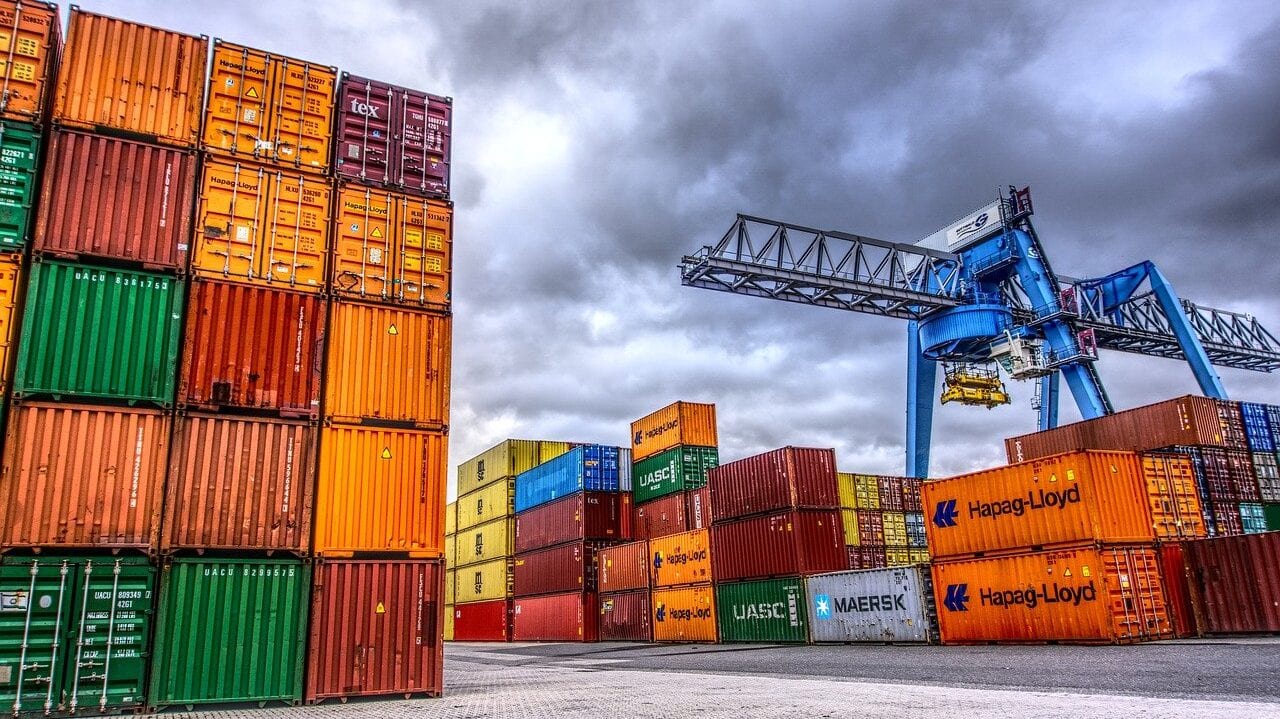
As we said, the solution is not close. The variables in the equation make an immediate resolution very complex. On the one hand, the maritime transport crisis—with loading and unloading problems at ports, and shipping companies posting record revenues with fewer fleet units operating and skyrocketing prices—is causing a huge mobility bottleneck for raw materials and finished products.
However, maritime transport is not the only culprit in this crisis: 15,000 road freight drivers are needed in Spain alone; alternatives are being sought in air transport, which is increasing its cargo transfer activity, but it is not cost-effective for all products; the pandemic continues, leading to temporary closures of companies in China… This chain of circumstances has created a logistics bomb that has exploded into a global logistics crisis. And we should learn from situations like this to face the future better.
Possible solutions to the supply crisis
There is already talk in political and business forums about avoiding extreme dependence on other countries for the supply of certain materials or high industrial-consumption items, with measures such as the chip law announced by Brussels to prevent the European Union’s dependence on Asia and the United States, or subsidies for major tech companies to strengthen semiconductor manufacturing in Europe.
Alongside reshoring, the system’s key lever to ensure the supply chain works seamlessly is the implementation of new technologies across all its links. Artificial Intelligence, Data Science, Advanced Analytics… make it possible to optimize processes; simplify and bring forward decision-making by increasing forecasting rates, and improve efficiency at every step of the supply chain.
How does Artificial Intelligence help logistics?
Process automation can be applied across the entire supply chain in a wide range of tasks, with countless advantages for logistics. Predictive systems, for example—such as those dedicated to demand forecasting or predictive maintenance—allow us to anticipate companies’ needs. They provide early estimates of expected sales or the need to inspect or replace equipment parts, increasing planning capacity and simplifying decision-making.
Along the same lines, to anticipate future events, there are digital twins—tools that allow us to operate within a virtual replica of a real product, process, or service to test different situations without taking any risk. For example, warehouse managers may propose a spatial redistribution of items or changes to the movement of SKUs for inbound or outbound flows at a distribution center. With a digital twin, it is possible to model as many scenarios as desired and verify their effectiveness to choose the best option in advance. Digital twins also make it possible to stress-test systems to train for unforeseen events or incidents and provide the best solution if those issues occur.
In addition, new technologies make it easier to locate goods in the warehouse through barcodes and RFID, move them with automated internal distribution systems, and ensure full traceability of parcels and the fleet, enabling real-time control of the entire distribution process.
In addition, loading processes are optimized thanks to planners that make the most of available space, taking into account variables such as size, weight, fragility, or unloading time. Once goods are in their means of transport, the distribution process begins, which is far more efficient, sustainable, and cost-effective if route planners are used for its design. With them, we can design the best routes, saving time and fuel, and manage incidents by reassessing routes in the event of unexpected problems.
Once the means of transport arrives at its destination, receiving the material is also much faster if we rely on technology. With computer vision systems, we can perform automatic load counts in fractions of a second, and even check its condition.
Big Data: the supply chain’s ally
As we can see—and these are just a few examples—logistics processes and supply chain efficiency have a strong ally in Artificial Intelligence and Data Science. The current supply crisis has countless causes that have converged at the same time, leading to the blockage of the global system, which has highlighted the need to implement changes and improve the efficiency of logistics processes; and for this last part, disruptive new technologies are the solution.