
Steps to Implement a Predictive Maintenance Plan
In the post: What is Predictive Maintenance? we already introduced this production tool. Here, we analyze a roadmap for its implementation that allows us to obtain benefits from day one.
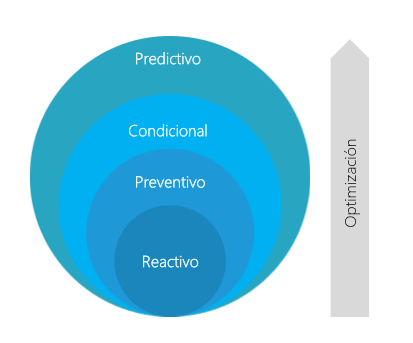
A noteworthy point is that predictive maintenance must be conceived as the end of a process, whose implementation speed will depend on the degree of digitalization of the plant and the available knowledge of the machines to be monitored. Therefore, it is unrealistic to think of steps to develop a predictive maintenance plan from scratch in the short term. At LIS Data Solutions, we propose a roadmap that will lead us to that objective and provide clear benefits along the way. This involves adopting predictive maintenance in stages.
What is a Predictive Maintenance Plan?
It is a proactive approach to maintenance within companies. The ultimate goal is to prevent failures and improve the lifespan of equipment, thereby avoiding productivity failures and cost overruns. We explain it all in this article on our blog.
First stage. Monitoring machine operation.
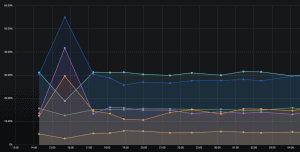
As the first level of digitalization, it is necessary to read our machine: that is, to have process data available in a permanent, automatic, and digitalized manner. The relevant parameters and the reading frequency are entirely dependent on the characteristics of the process. For example, in a critical welding process, it may be necessary to measure the position parameters of a robotic arm every 10 ms, while in a pressing process, the position may only be important at the end of the stroke.
The appropriate choice of these parameters is crucial for the success of the project; therefore, at LIS Data Solutions, we offer our experience in a wide variety of industrial processes to guide our clients toward the best solution.
Second stage. Modeling the production process. Targeted preventive maintenance.
Once we monitor the relevant process parameters, it is time to generate a history and conduct an analysis of how the measured values are determining the behavior of our equipment, and vice versa. To do this, we use algorithms that relate parameters and weigh the influence of some over others. In this process, the larger the data set, the more variability we can account for and the greater the correlation accuracy. This implies that over time we will be able to obtain more precise results.
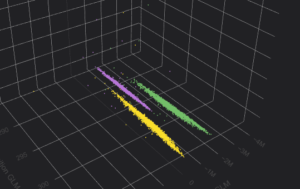
The weighted relationship of the parameters will allow us to model the normal behavior of our machines in the process. This is key to achieving predictive maintenance, although it is not yet sufficient. At this stage, we can implement what we know as Targeted Preventive Maintenance: we will continue to launch our maintenance tasks preventively, but since we already know the normal operation of our machines, we prioritize those that are most affected—that is, those that deviate most from this normal operation. At this stage, we can already see substantial savings and a decrease in unforeseen events, given that we have objective data to make decisions.
Third stage. Definition of limit scenarios
As we progress along this roadmap, we accumulate more and more information. As the information related to the breakdowns produced is enriched, we improve the definition of the operating limits of our machines. These limits are the areas where we know the probability of failure is higher than acceptable.
For the machines for which we have been able to define these limits with high probability, we are now in a position to implement predictive maintenance.
Fourth stage. Predictive Maintenance
In the first stage, we modeled the normal operation of our machine. Subsequently, during the second and third stages, we analyzed information to define the limits within which our machines are not at risk. At this point, we know with probabilistic certainty that we should only deploy maintenance tasks on those machines that reach their limit operating zone. This will reduce our interventions to those strictly necessary, in addition to providing us with a general overview of the status of our equipment in advance, something that will improve coordination with the production and planning department.
Monitoring and continuous improvement.
Like any Industry 4.0 digitalization implementation, Predictive Maintenance must be monitored and checked regularly to make real continuous improvement effective. The most important KPIs must be controlled to serve as a driver and follow-up for process improvement actions. In this way, we will not stop at improving the efficiency of the factory.