
Predictive maintenance with digital twins
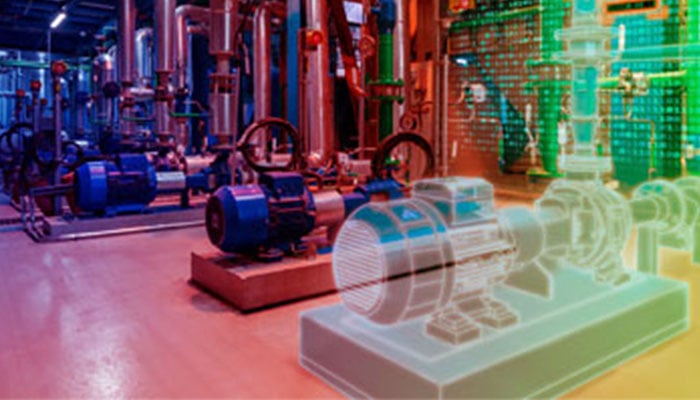
Predictive maintenance is one of the major milestones for companies on their path to Industry 4.0. Keeping production or assembly lines, vehicles, conveyor systems—in short, machinery in general—operating under optimal conditions for as long as possible increases productivity and is directly linked to cost savings.
Big data, artificial intelligence, and Internet of Things (IoT – IIoT) devices make it possible to take maintenance to the highest levels of efficiency by implementing predictive systems that enable us to anticipate potential failures through anomaly detection. Once parameters that fall outside predefined values have been identified, maintenance teams will be able to make the most appropriate decisions easily and in advance, so that the impact of the malfunction is as small as possible.
In practical terms, early anomaly detection helps avoid major, costly unexpected downtime; scheduled interventions that, in most cases, are carried out unnecessarily; and high spare-parts costs, as parts are replaced only when truly needed. Maintenance interventions move from being scheduled to being carried out when the equipment itself requires them.
Digital twins, one step further
As we can see, the benefits of implementing predictive maintenance systems are countless, but technology allows us to go one step further through digital twins. Also known as mirror systems, they are virtual representations of real operating environments, to which they are connected through cyber-physical systems (CPS). Gartner has classified these simulations as one of the 10 technologies that will drive companies’ digital transformation and their journey toward Industry 4.0.
However, for digital twins to exist—as with the entire data science revolution—data is required. Through Internet of Things devices, operating parameters are collected from machines, lines, or plants; combined with historical activity databases and, thanks to the application of artificial intelligence techniques—specifically machine learning—this makes it possible to generate an avatar of the real equipment.
What does having a replica of industrial machinery contribute to predictive maintenance? A great deal, and its greatest potential comes from the ability it offers to run simulations. We have made a major leap from descriptive analytics, which tells us what has happened, to the predictive analytics we have been discussing, which tells us what will happen with high accuracy rates. However, as we mentioned earlier, there is another step—enabled by prescriptive analytics—that allows us to experiment so we can determine what we need to do to prevent something from happening.
Therefore, in addition to anticipating breakdowns through anomaly detection, as we already do with predictive systems, digital twins make it possible to run simulations to find the best way to address those failures and to test future scenarios so we can prepare for what may happen. These tests are also carried out without any risk, since parameter changes are made in the reproduction—or twin—of the main environment, precisely to understand the reactions that any intervention may trigger in the machinery.
Benefits of digital twins
Digital twins therefore provide a safe environment that replicates the original with high fidelity, with the following benefits:
- Failure anticipation: both systems remain connected, making it possible to identify in the physical system any change to the parameters established in the virtual one. When a deviation occurs between the two, maintenance teams can assess the anomaly to prevent more complex failures or breakdowns.
- Scenario simulation: digital twins allow us to train responses to different circumstances, test the outcome of adjustments, and work on process optimization by simulating any scenarios that need to be tested.
- Plan maintenance actions: it is also possible to study the behavior of machines, lines, or plants to plan maintenance actions at the time when the least disruption is caused to Production.
- Calculate wear: digital twins are also very useful for estimating the deterioration that parts may be experiencing and for bringing forward or delaying their replacement based on their service life and performance.
- Plan new manufacturing strategies: because there is a safe testing ground, new manufacturing strategies can be devised and implemented without uncertainty, since their effects on the plant have already been tested virtually.
- Extend equipment service life: by continuously monitoring machinery, alerting on deviations from predefined parameters, and determining the optimal time to replace parts, equipment service life is extended.
- Cost savings: digital twins prevent major downtime and unplanned interruptions to manufacturing processes, minimize spending on spare parts, extend machine service life, optimize maintenance teams’ time, facilitate decision-making, enable future planning, and much more—resulting in significant cost savings.
As we can see, the shift from descriptive to predictive analytics has been a giant leap in the concept of Industry and its progress toward digital transformation. However, the path to maximum efficiency continues with prescriptive analytics, which is where digital twins fit in. Not only being able to predict what may happen, but also determining what needs to be done to prevent it, significantly boosts business efficiency—supported by artificial intelligence and big data—making operations increasingly productive, profitable, and sustainable.