
Logistics Big Data: “The major outstanding challenge to manage”
- Fuel consumption and tax payments.
- Overall revenue in the logistics sector and by company.
- Transport rates and prices.
- Workplace accidents in logistics.
- Product loss in the supply chain.
- Demand forecast for today.
- Warehouse inventory updated by the WMS.
- Food supply chain traceability.
- Geolocation of the truck fleet.
- Returned orders, according to customer service.
- Data on forklift operations in the warehouse, thanks to RF.
- Order picking data.
- Last-mile distribution data.
- Traffic fines, administrative infringements, etc.
- Technical Support incidents for the customer portfolio.
- Number of followers in your digital community to convert them into customers.
- Service stations, logistics platforms, rest areas, inland ports, etc.
- Pallet management, containers and packaging, packaging, etc.
- E-commerce consumption habits.
These are just 19 examples of Big Data in any supply chain. Asier Barredo, CEO at LISDATA and an expert in Supply Chain Data Analytics, has assessed the current state of Big Data in the Spanish logistics sector: “There are warehouses that still have not installed barcodes in their systems. Spain still has a long way to go to catch up with Big Data management in the supply chain—at least to levels similar to those of Central European countries. I believe that managing big data in logistics and transport companies is the major outstanding challenge today. And it will be one of the keys to the survival of many companies in the sector, both SMEs and multinationals. Various studies on supply chain trends for the next 10 years highlight the importance of micro-segmentation as a key success factor. A micro-segment is the most basic part of each product portfolio and is what triggers the final purchase decision, not the product category or family itself. Micro-segmentation can be supported by Big Data analytics. It is the perfect tool. The results will be surprising and efficient.”
Asier Barredo highlights the need to harmonize how Big Data is valued across European countries: “The coordination we have today is possible thanks to IT tools—powerful programs that allow professional consultants to translate all data into conclusions that benefit each business.” In this regard, the CEO of LISDATA has emphasized the effort involved in, for example, the European alignment of its statistical system:
Internet of Things (or industrial internet)
Logistics Big Data should be seen more as an opportunity to better understand the customer than as a problem. The Internet of Things (in any object/product in our personal and professional lives) is something everyone can accept. However, the reality of Big Data and its processing requires change management. For example, investments in large relational databases will soon become obsolete.
Lora Cecere, Founder and CEO of Supply Chain Insights, recently stated that: “Big Data offers the opportunity to redefine supply chain processes from the outside in and define a customer-centric supply chain. This contrasts with the last decade’s IT investments to respond from the inside out, based on order shipments. These traditional investments in enterprise resource planning (ERP), advanced planning systems (APS), and traditional business intelligence (BI) for information improve supply chain responsiveness, but they do not allow the organization to orchestrate that process from the outside in. New types of data (for example, images, social data, streaming, sensor input from global positioning systems (GPS), the Internet of Things, and unstructured text from email, blogs, ratings, and reviews) offer new opportunities. They also require new techniques and technologies. Big Data for the enterprise means listening, testing, learning, and responding faster.”
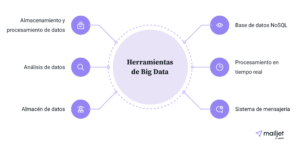
The CEO of Supply Chain Insights reported on a survey they conducted last September among 123 manufacturers, retailers, wholesalers, distributors, cooperatives, and 3PL providers familiar with managing large volumes of data. These are the results:
- 76% consider Big Data an opportunity, and 28% already have a Big Data initiative in their company. The possibilities of large data volumes are endless.
- Adopting new concepts for large data volumes is a radical change for supply chain teams. Change management is required.
- These are small, interactive projects that use new forms of analytics. Projects must be based on a business problem, and the approach must focus on continuous learning. This is quite different from the traditional project mapping approach. Companies must be open to the results and invest in innovation through analytics.
- By Big Data, respondents mean a petabyte: working with a variety of data that goes beyond traditional structured data, and build processes based on increased data velocity associated with real-time streams.
- The biggest opportunity is not in data volume or velocity; rather, it lies in opportunity management associated with new forms of data.
- Databases are growing, but they can be managed. 15% of companies have a database today that is at least a petabyte. The largest databases are not for enterprise resource planning (ERP). Instead, they are found in product management areas or channel data.
- Organizations with active master data management teams are more likely to have a large cross-functional data team. 54% of companies with Big Data initiatives believe data analytics is very helpful with MDM.