KNIME Alternatives in 2026: What Companies Are Using Today
For years, KNIME has been one of the most popular platforms for data analytics, automation, and machine learning through visual (drag & drop) workflows. In 2026, it remains a functional solution, especially in environments where rapid prototyping and a visual approach are valued.
However, more and more companies are asking the same question in an increasingly advanced technological context: does it still make sense to base an entire data strategy on a single tool like KNIME?
The reality is that today there are more flexible, scalable alternatives aligned with modern cloud architectures, which allow covering the same use cases (and even more) by combining specialized tools.
In this article, we focus on KNIME alternative tools in 2026, organized by work type and business need.
KNIME Alternative Tools in 2026
Although KNIME remains a widely known tool for visual analytics and automation, in 2026 many companies consider that basing their entire data strategy on a single platform is no longer viable. The increasing volume and complexity of data, the adoption of cloud-native environments, and the need to scale, automate, and bring processes to production have caused closed, visual workflow-based approaches to lose relevance.
More and more organizations are opting for modular architectures, combining specialized tools according to the type of work, to gain flexibility, avoid technological dependencies, and evolve their data platform without being tied to a single solution.
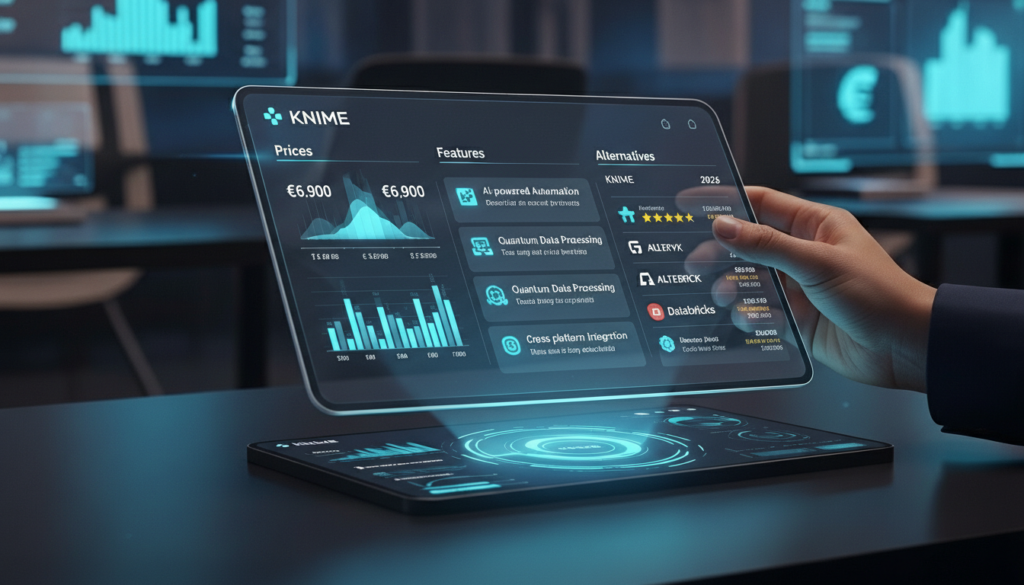
Below, we share 5 types of alternatives (with specific tools) based on the main objective:
KNIME Alternatives in 2026 for Data Integration / ETL (Batch)
When the main focus is robustly moving data, automating ingestions, and executing scheduled processes (batch), many companies replace KNIME with environments more oriented towards orchestration and cloud connectivity:
- Azure Data Factory + Python
Ideal for building ingestion and transformation pipelines with dependency control, scheduling, and ready-to-use connectors for multiple sources. Python is incorporated when transformation requires more advanced logic or custom processes.
- Azure Data Factory + Azure Blob Storage
A simple and very common alternative: ADF extracts and organizes data into Blob Storage as a landing zone, making the data available for subsequent analytical consumption in a lake or platforms.
This is the best alternative if you are looking for industrialized ETL/ELT, rapid integration, and repeatable processes.
KNIME Alternatives in 2026 for Analytics and Data Preparation at Scale (Platform)
In teams where the challenge is no longer just preparing data, but scaling analytics (volume, complexity, collaboration, and standardization), migration from visual workflows to lakehouse-type platforms is common:

- Azure Synapse + Azure Blob Storage / Azure Data Lake Storage + Python
Combines centralized storage with analytical capabilities (SQL + Spark) and allows using Python for data preparation or advanced analysis.
- Databricks + Azure Data Lake Storage + Python
Widely used when the team needs to accelerate data engineering processes and advanced analytics with Spark, notebooks, and reproducible workflows in collaborative environments.
This is the best alternative if you are looking for massive data preparation, collaborative environments, and performance.
KNIME Alternatives in 2026 for Streaming / IoT (Real-time)
If your use case demands real-time data, KNIME often falls short compared to event-based architectures, where continuous ingestion and immediate exploitation are prioritized:
- Azure IoT + Azure Event Hub + Azure Blob Storage + Azure Synapse + Python
A very typical architecture for:
- ingestion from devices and sensors (IoT)
- event processing (Event Hub)
- persistence in storage/lake (Blob Storage)
- scalable analytical consumption (Synapse)
- custom logic or models (Python)
This is the best alternative if you are looking for streaming, event traceability, and near real-time exploitation.
KNIME Alternatives in 2026 for Machine Learning + MLOps
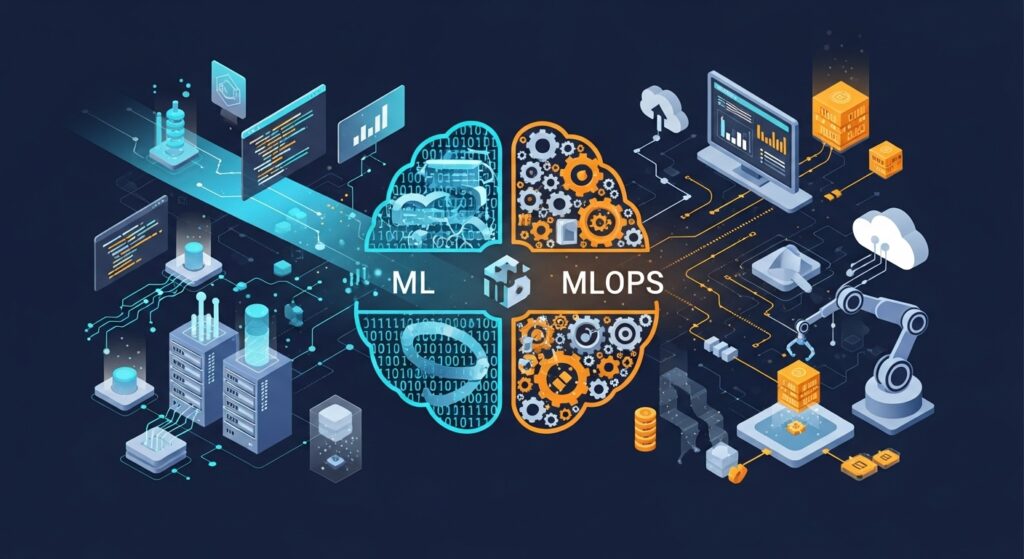
For companies that need to move from “local models” to production models, with version control, automation, and deployment, the combination of cloud tools + ML Engineering is usually more powerful than a 100% visual approach:
- Azure ML + Databricks + Python (Pandas / Scikit-learn)
Azure ML allows organizing experiments, training, and deployment; Databricks provides computing power, pipelines, and collaboration; and Python (Pandas/Scikit-learn) maintains full flexibility.
- GitLab for CI/CD and versioning
Very useful if the team wants to implement real MLOps practices: automated pipelines, versioning, environments, and release control.
This is the best alternative if you are looking for model operationalization, governance, and ML scalability.
Why choose LISDATA
At LISDATA, we work to understand both data and your business. With a focus on applied artificial intelligence, we collect and analyze information to offer vertical and scalable solutions.
- We are specialists in logistics consulting, industrial and transport.
- We develop custom projects for data capture, processing, and activation tailored to your business.
- We have high technical specialization with a strategic vision and results orientation.
- We carry out rapid implementation of technological solutions.
For us, artificial intelligence only generates value when it has a direct impact on processes and people’s daily work. The LISDATA team of professionals works to ensure that AI is practical, reliable, and aligned with real needs. If you want to know how we apply artificial intelligence in real scenarios and how these solutions can be adapted to your organization, contact our team.