
Deep Learning, Neural Networks, and Computer Vision
Learning is an inherent condition of human beings. From the moment we are born, we gather information and store it so we can carry out the tasks required by everyday life. This process, so uniquely ours as perhaps misnamed rational animals, is no longer exclusive to us. Machines are capable of learning or, more precisely, we are capable of making them learn.
Thanks to the development of Artificial Intelligence (AI), we have managed to get computers to imitate certain functions typical of humans. But it doesn’t stop there: as we’ve already noted, a further step—and not just any step, but a quantum leap—has been taken by getting machines not only to perform actions, but to learn from them and improve their own performance.
This self-educating process is achieved through the implementation of Machine Learning systems, a branch of AI focused on developing algorithms that imitate human cognitive functions. Within this technique, Deep Learning has also been developed, which works with the concept of a mesh, generating artificial neural networks that simulate the functioning of biological neural networks and, consequently, the workings of the complex human brain.
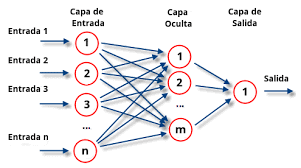
As its name suggests, Deep Learning derives from the use of hidden layers in the composition of neural networks. These networks have an input layer or data source that feeds the system, numerous intermediate layers whose processed values remain unknown to us, and an output layer that displays the result of the data processing carried out by the network. Continuing with the human-machine parallel, this digital procedure follows a path similar to what happens when, for example, someone throws us a ball: our eyes capture the image of a moving object (input source), the brain processes the information received—size, speed, estimated weight, color, material…(hidden layers)—and with that processed data, we respond to the initial stimulus (output layer).
Among the many capabilities of this complex and comprehensive system, Deep Learning excels in image analysis, recognition, and classification processes based on a trained model (computer vision). This capability is increasingly useful given that graphic information has become universal thanks to the falling cost and growing availability of technology. Today, we have access to a wide range of footage, much of it in real time, captured by cameras (fixed or mobile, ground-based or aerial), ultrasound, radiofrequency, or satellites, enabling countless applications across a wide variety of fields such as facility maintenance, autonomous vehicle driving, fleet and warehouse optimization, medical diagnosis, or surface analysis (crops, disaster assessment, engineering, among many others).
Convolutional Neural Networks
In developing computers’ ability to ‘see’—whether by determining what an image represents as a whole (classification) or by detecting an object within it (such as monitoring mask usage during the COVID crisis we’re experiencing, for example)—Convolutional Neural Networks (CNNs) are especially well suited, since, unlike conventional neural networks and other image classification algorithms, they process information quickly and efficiently.
Their working method is based on identifying patterns in small areas of the image rather than the image as a whole. To do this, the algorithm takes a small square of pixels (input) that passes through various hidden layers organized for a gradual analytical process; that is, the first layers of the network detect simple features such as lines, curves, and edges, while the deeper layers are capable of recognizing complex shapes such as people, vehicles, or animals. Consequently, the greater the number of layers, the better the network’s ‘viewing capacity,’ and the more accurate its output, which shows as a result of the analysis the probability that an image belongs to a predefined category that the network has been trained to recognize.
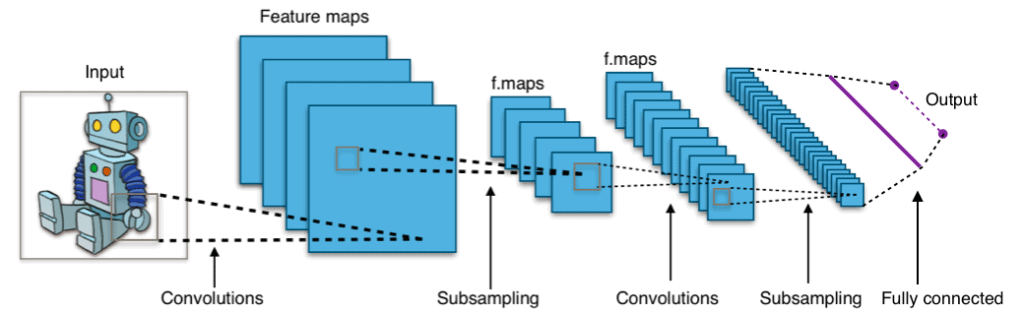
The most interesting part of the whole process is that, at each layer, the network interconnects the different features of the image, using that information to learn and improve its recognition capability, eventually—as mentioned—identifying highly complex shapes in the final steps. Building on this self-sufficient process, an autonomous mechanism can be achieved by training the neural network with a broad range of images, which it will use to build its own memory. Once this phase is complete, the Deep Learning model will be ready to tackle new images without any prior classification.
From Theory to Practice
As we’ve already mentioned, computer vision has countless applications, and these are increasing day by day at the same pace as the development of new image-capturing technologies. To bring the theory into practical territory, we’ll present examples of projects we’ve carried out at LISDATA within the framework of Deep Learning applied to visual solutions.
FACILITY LOCATION
An international logistics operator approached us with the need to identify the best locations and facilities within specific geographic radii, in order to acquire warehouses close to their mass distribution areas. Once we understood the requirement, we developed a search solution using quadratic algorithms based on satellite imagery, which we cross-referenced with land registry data to identify plots and buildings and classify them according to their purchase potential based on a combination of parameters such as size, geometry, symmetry, location, and price per square meter. We also created a convolutional neural network capable of classifying images according to land type and building type.
AUTOMATIC TUMOR SEGMENTATION
A completely different challenge, but one also solved with Deep Learning, was presented to us by an academic institution: implementing algorithms capable of performing automatic tumor segmentation in MRI images, with the goal of speeding up initial identification processes and decision-making.
And so we got to work. In this case, we designed an automatic segmentation model for high-grade gliomas (HGG), whose architecture is based on the use of symmetric convolutional neural networks. The results in terms of obtaining binary segmentation maps of the tumors were very positive, with strong performance in spatially locating them.
MAINTENANCE OF LARGE INFRASTRUCTURE
At the moment, one of the projects we’re involved in focuses on solving the monitoring and maintenance challenges of a large industrial infrastructure. Using both satellite imagery and camera-captured images, we’re developing an early anomaly detection system that can identify issues that may result from, or lead to, breakdowns and malfunctions.
In this case, the neural networks are trained to locate and identify spontaneous shapes and objects in the captured images. In other words, the algorithm detects anything present where it shouldn’t be, such as fire or product leaks, to name a couple of examples.
PARKING SPACE DETECTION
Bringing the capabilities of graphic processing with Deep Learning into everyday life, one application of computer vision is parking space detection. This task can be very useful on public streets, but it’s even more valuable in facilities dedicated to vehicle storage, such as ports. In these facilities, different operators work simultaneously with varying volumes and turnover of units, so it would be especially beneficial to know in advance which spaces are available at any given time, when additional space is needed, or which areas are best suited for a particular use.
In this case, using a computer vision algorithm, we would identify the spaces in the image and then, using a classifier, determine the presence or absence of a vehicle.