
Big data analytics to reshape the Supply Chain in the post-coronavirus era
The world stops, now what?
The world has come to a halt. Just like that, suddenly. And although there had been people and organizations warning us that something like this could happen, the typical accident has occurred where the warning sign goes up only after the fact.
For many years now, concepts such as CPFR, Digital Twins, Blockchain, decision trees for logistics have been discussed, and in recent years Autonomous Distribution Networks that make real-time decisions based on the forecast scenario.
Under normal conditions, all this has worked and will continue to work, but… what do we do in the face of a crisis of this magnitude? When faced with what is known as a “Black Swan,” there’s little we can do, although, as always, some will have been better prepared than others.
In any case, all we can do now is look ahead. There’s still a lot of dust in the air after the stampede, and it’s not yet possible to glimpse where the market is heading.
We don’t know whether the recovery will be V-shaped, U-shaped, or L-shaped, but what we are sure of is that we will come out of it, and everything will go back to almost the way it was before.
The good side of crises is the acceleration they bring to certain technologies and the shift in priorities they trigger in many companies.
If digitalization was already a reality, decision-making in complex processes through Artificial Intelligence algorithms will soon become one too.
Whether it’s V, U, or L-shaped, in many cases we’ll have to do new things that weren’t planned, in order to get out of this situation as soon as possible, and the important thing will be not to get it wrong, neither in timing nor in approach, but above all in what we decide to do.
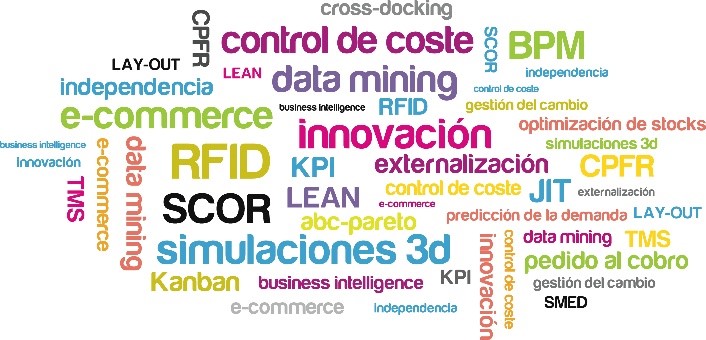
To do this, before making any decision that could cause us new problems, we should at least follow some kind of decision-making method, whether the ones known as analog methods (e.g., MINTZBERG, RAISINGHANI AND THEORET) or digital methods, divided between decisions based on supervised learning algorithms (regressions, vectors, decision trees…) or unsupervised learning algorithms (PCA, K-Means, correspondence analysis…)
Some of you may find this new, but these are methodologies that large companies have already been implementing with varying degrees of success.
But bearing in mind that, according to Paul C. Nutt, one of the leading experts on business decision-making, who claims that more than half of all business decisions made to date have been wrong, this might be a good time to improve this figure by allowing ourselves to be advised by algorithms and robots that can evaluate many more variables than we as humans currently can.
Crises as accelerators of digital transformation in the Supply Chain
It has always been said that crises bring both risk and opportunity, and we will only come out stronger based on the decisions we make once the storm has passed.
There will be fewer customers, fewer suppliers, more regulations, and new ways of doing things. In short, a completely new scenario. We’re starting a new game. Each player, with their own cards and chips, will have the chance to reinvent themselves, strengthen what they were already doing well, and in just as many cases, make mistakes and sink further.
The big difference now lies in what to do, how to put it into practice, and how to measure it.
For some time now, the concept of GLOCAL has been discussed. There are different interpretations, but I prefer the idea of thinking globally and acting locally, or even going one step further: producing locally to sell globally, and having balanced distribution networks with different production sites and different transport routes.
Autonomous supply networks automate buying and selling decisions for products and services based on pre-programmed parameters
I know it’s hard to turn things around, and that after years of outsourcing manufacturing thousands of kilometers away, rebuilding this close, multiple supplier network may in some cases not be feasible. But what if we could simulate it? What if, through algorithms, we could find the optimal Supply Chain models, and have them change autonomously based on costs, risks, service levels, dependencies, and quality?
This is where the concept of autonomous supply networks comes in—simply a process through which buying and selling decisions for products and services are made based on various pre-programmed parameters, automatically.
If this crisis is going to bring one thing, it’s an increase in distrust of the global logistics model. Following the recent attacks on this model by the U.S. government through the imposition of tariffs, the capacity saturation in countries like China, and the loss of service to small and not-so-small customers in Spain, combined with the current COVID-19 crisis—which has led to the breakdown of several international supply chains—a new scenario is emerging, one that will take shape over the coming years.
I told you so!
It’s trendy. Well, actually, it always has been. There’s not much point in cutting in with comments like… “It was obvious!” “We should have done it the way I said,” or the ever-reliable… “I told you so!”
Everything is getting more complicated, and it has been for several years now. Imbalanced supply-demand hubs, relocation of customers and suppliers, changes in consumption habits (smaller order sizes, higher service level requirements)
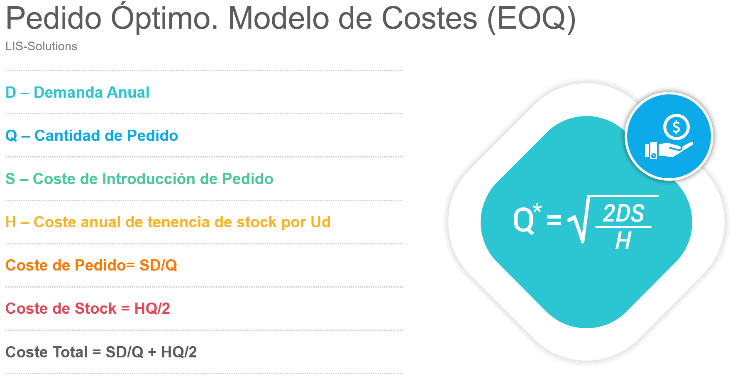
Luckily, we also have new allies. Algorithms
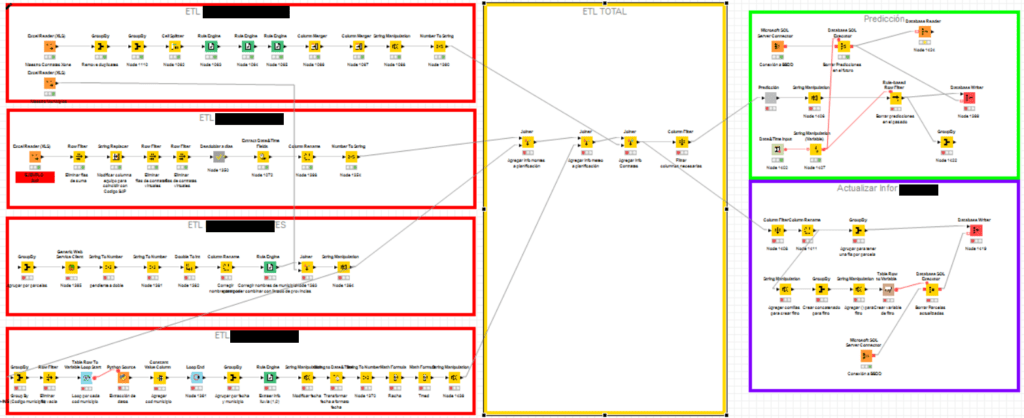
* Algorithm developed using the Knime tool
For several years now, we have been developing AI-based decision-making assistants that shed light on the difficult challenges the industry faces in these times of change.
The results are simply spectacular: savings of several million per year in the supply chain, double-digit improvements in customer service levels, and a greater sense of control over our business. These are the first steps toward humans beginning to trust Artificial Intelligence.
As companies begin to adopt these assistants (what we call Digital Playground), we’ll move from “I told you so” to “I’m telling you now.” The algorithms, robots, or whatever we want to call them will see the entire Supply Chain (and yes, that includes production) and will make the best global decision, sending information so we can act locally while thinking globally.
At LISDATA, we create virtual environments so that, step by step, business experts can build scenarios to test their estimates, experience, and intuition.
The traditional battles between departments—Production, Logistics, Transport, Purchasing, IT—will be significantly reduced, because we’ll no longer rely on “I told you so.” Instead, we’ll all sit down together as the Supply Chain Team and, jointly advised by our Bot, make the best decisions.
Practical solutions to know what to do.
“The solution always lies within”
Supply Chain Digital Playground
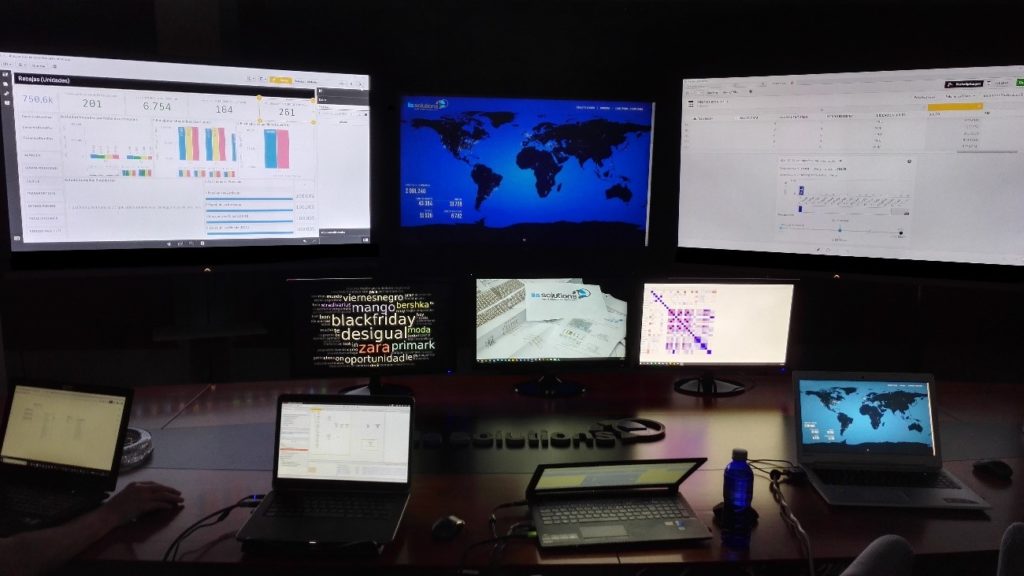
Our “Supply Chain Digital Playground” application is based on a reimagined version of the old “War Room” concept, where several stakeholders come together to make intensive, AI-driven decisions.
This is a game/event that gives the process expert access to all available information so they can develop their planning and decision-making approach.
At the same time, through AI algorithms, the system proposes solutions and evaluates (positively or negatively) the decisions made by the group based on different parameters.
These events take place at the client’s premises (2 sessions, 4-6 hours each) with the leading experts in the process, who help model the application and validate the quality of the algorithms’ results.
The design and simulation of the scenarios take place in meetings prior to the intensive analysis event (Workshop) and are led by the following roles.
 The Wizard: A Data Scientist specializing in Supply Chain who has the ability to apply the most complex mathematical algorithms. They bring together all external and internal databases and build the simulation model
 The Troll: This is our certified Senior Consultant (Master’s and other degrees) with hands-on experience as a Supply Chain Director. Their role is to translate the magic of AI and predictive algorithms into practical, understandable concepts that are, above all, valid for the business.
 The Eraser, or Project Manager: This is the person who gets things done in the Workshop and the project overall. They are results-driven and responsible for ensuring the client is satisfied after the event.
 The King: This is the client. They are the center of the event, around which everything revolves. They must understand the results of the magic and be able to interpret the Troll’s proposals. Through their team, they must validate the decisions made by the algorithms and the practical applications proposed by the Eraser. Their involvement in the event (Workshop) is key, as it brings the strategic level that cannot be fully captured in the application.
Conclusions
Everything starts over again, just as we emerged from the various crises this country has experienced—’74, ’87, ’92, ’00, ’08, and now 2020, which, like 2008, will not be a single crisis but rather a combination: a crisis stemming from Tourism and Hospitality (24% of GDP), a crisis stemming from the high percentage of SMEs we have, and from the high percentage of temporary workers.
All this will cause a spiral of contraction, which will require us to be imaginative when solving problems.
Technology can help us gain visibility into the real situation of our businesses and guide us in making the “right” decisions, steering clear of the scenario painted by Paul C. Nutt.
“More than half of the business decisions made over the past 25 years have been wrong”