
Artificial Intelligence Applied to Marketing: DALL-E and Beyond
Many speak of Artificial Intelligence as a major threat to advertisers, content creators, and photographers with the arrival of DALL-E. However, AI has become a great ally in digital marketing and is democratizing the use of many tools previously inaccessible to those without specialized training.
The analytical capabilities it offers and the personalization ratios it achieves in customer service have made it indispensable in any company’s strategy. In this article, we will explore how AI applied to marketing is changing the sector and why organizations must adopt it.
Artificial Intelligence and Marketing
Digital marketing, like technology in general, is constantly evolving, but the rise of Artificial Intelligence (AI) has abruptly transformed it. AI has a wide range of applications in our field of activity, and its adoption, now mandatory, has undoubtedly changed how marketing professionals operate.
Companies that successfully implement AI in their marketing strategies will be able to reach customers more effectively, increase the ROI of their campaigns, and reduce costs simultaneously. But why? Equipping machines with the ability to think, process information, and respond to stimuli makes it possible to personalize messages and customer service, automate campaigns, analyze needs, and optimize prices, among many other potentials, massively and autonomously, making direct and immediate interaction a priority.
And it is at this point that AI has revolutionized digital marketing. Let’s anecdotally consider the ‘craze’ caused by the emergence of the DALL-E application, with which we can generate images on demand based on written parameters, or the various existing text generation tools.
Why use artificial intelligence in digital marketing?
E-commerce has experienced gradual year-on-year growth since its inception, with a major explosion in 2020 caused by the COVID-19 health crisis. In Spain alone, online transactions grew by 36%, and this trend is now irreversible. We have changed our habits, our way of buying and interacting with sellers, with e-commerce sales now surpassing those made by physical stores.
Consequently, customer contact, campaigns, and sales opportunities primarily operate in digital environments, which we access not only to finalize purchases but also to gather information, make comparisons, and confirm perceptions about companies and products. The problem is that these environments are massive and overwhelming. Billions of users daily go online to establish diverse types of contacts with companies, and it is essential to provide them with the best and fastest possible attention to attract or retain customers. In this scenario, the levels of attention and personalization required for success necessitate AI-driven tools. Let’s look at some of their potentials.
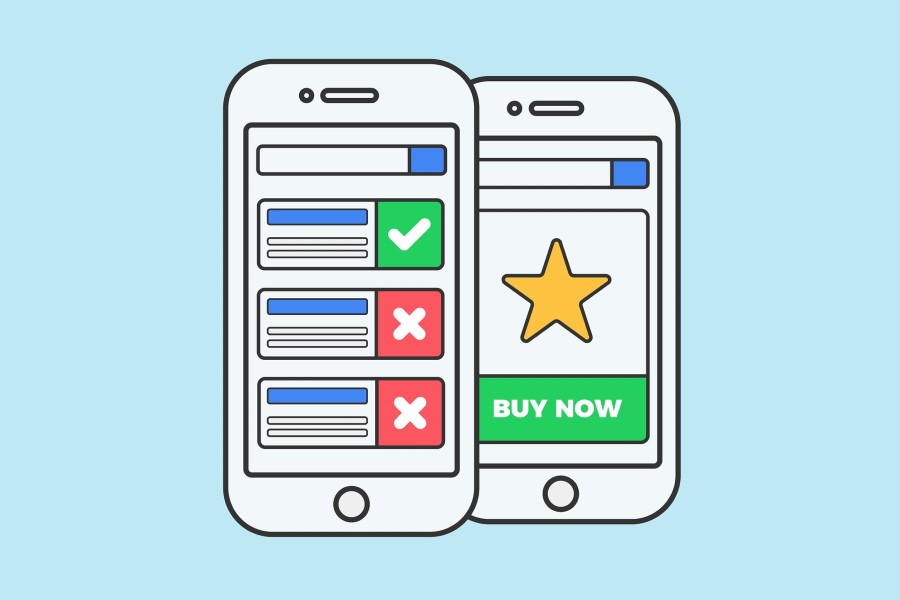
Uses of Artificial Intelligence in Marketing
Marketing Intelligence
Advanced data analytics, big data, and Artificial Intelligence allow for capturing, processing, and transforming millions of user data points into useful information, offering a clear vision of the aspects to analyze in each case. Without this massive analytical capability, strategies could only be based on intuition rather than certainty, assuming very high error rates. Marketing intelligence tools place the customer at the center of decisions.
User Micro-segmentation
In relation to the previous point, Artificial Intelligence makes it possible to group data according to its characteristics, segmenting information. In this way, with increasingly refined segmentations—micro-segmentations—messages, campaigns, products, and so on, can be adapted to the reality, needs, and tastes of each user group.
Predictive Marketing
Artificial Intelligence algorithms allow us to predict user behavior and even anticipate the buyer’s needs. This potential to foresee the future is fundamental in digital marketing because it gives companies the power to offer products before the search process begins and to guide purchasing decisions.
A very simple example can be found in the AI application used by Google’s search engine or Gmail’s email assistant, Smart Compose, which, once typing begins, provides suggestions for completing sentences based on writing style and user activity history. However, predictive systems can go further, as noted, by predicting needs.
Chatbots and Reduced Search Time
Chatbots are software developed with Artificial Intelligence that allow us to hold conversations with digital devices, simulating human interaction. This technology, based on Natural Language Processing (NLP), gives us the ability to interact, in real-time, with text and voice assistants that resolve our queries or help us in carrying out certain processes. Fundamentally, the most advanced devices, those based on machine learning, have become the 24/7 voice of the company, at a time when immediacy and personalization are key to materializing a sale.
AI Content Creation
Also thanks to Natural Language Processing, computers are capable of generating quality content based on user input. Creating texts for mailings, campaigns, social media, blogs, etc., is a time-consuming task that can be supported by content generation engines. We only need to provide some guidelines on the topic to be addressed, and Artificial Intelligence works its magic, returning texts adapted to the request. With segmented audiences, it is possible to automatically generate texts tailored to their preferences, previously analyzed and learned, which will be better received and perceived.
The prestigious tabloid The Guardian published an opinion piece signed by OpenAI’s GPT3 artificial intelligence model, in which it described itself. Other examples of this technology can be found in Writesonic or Articoolo, for instance, although many tools are available on the market.
On-Demand Advertising
Artificial Intelligence also makes it possible to offer direct advertising to the target audience, so that ads can be displayed on users’ screens according to their tastes and needs. Deep learning analyzes multiple sources of information and learns from user behavior to personalize ads and campaigns, increasing ROI.
Why use artificial intelligence in digital marketing?
As we have seen, to succeed in digital interactions with users, it is now essential to leverage the potential of Artificial Intelligence and all its derived technology. Only then is it possible to achieve the appropriate levels of content personalization and quality customer service that users demand. One-size-fits-all campaigns are a thing of the past; a consumer with a global offering at their fingertips, and never better said in this case, requires strategies adapted to their interests and needs, perceived as useful, and generating closeness to the company.
Consumers need to feel well-attended, and not just that, but when they need it and quickly, because if there’s one thing modern societies don’t have in abundance, it’s time. Guaranteeing these ratios of immediate, fluid, and secure attention in massive digital environments is only possible with Artificial Intelligence, and those who do not base their strategies on it will not be competitive in an increasingly demanding market.
If your company has not yet incorporated artificial intelligence into its processes, now is the best time. Thanks to the Digital Kit program, you can access advanced solutions at no initial cost and improve your efficiency. We help you with the Digital Kit to adapt your business to artificial intelligence.